
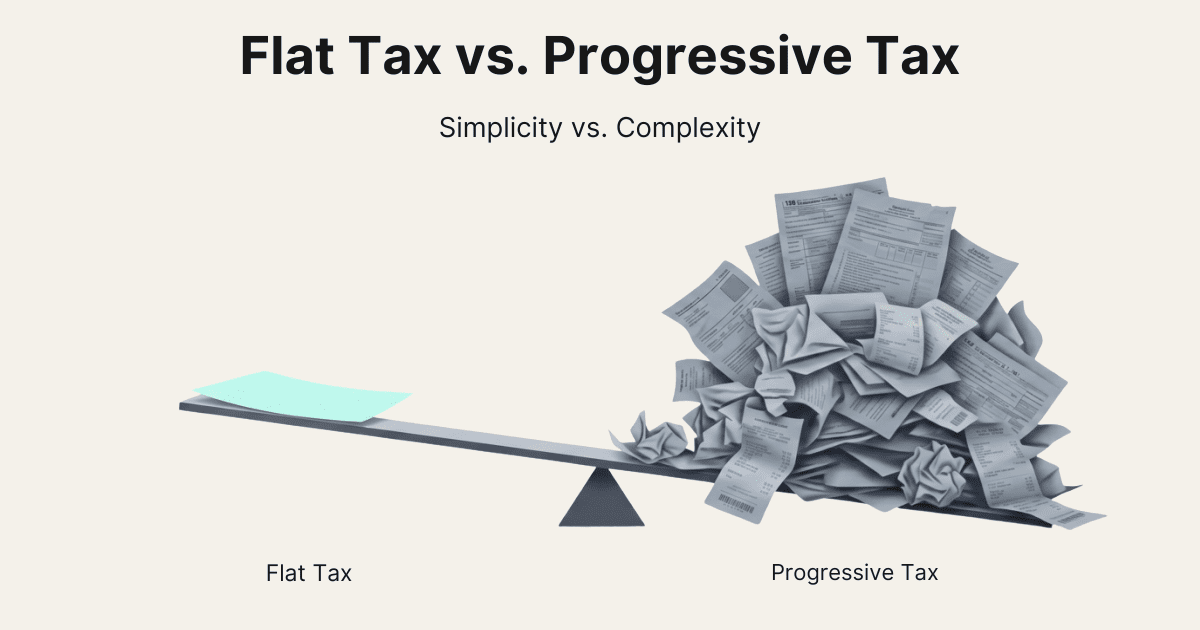
Many economists argue that the hardest thing in the world to master is the income tax code. As reform debates re-emerge, understanding the pros and cons of flat tax structures becomes vital for everyday taxpayers.
In reality, taxes serve as the collective annual fee we contribute to sustain a developed society. This capital builds our infrastructure, funds public classrooms, and maintains structural emergency services. However, the sheer complexity of our current progressive system often leaves citizens feeling structurally overwhelmed.
The Great Question: Deductions and Hidden Filters
If we all navigate the same public roads, do we all hand over an identical financial share to the federal government? Not necessarily. Consider two coworkers sitting in adjacent office cubicles, each earning an identical $100,000 base salary. They can walk away with wildly different tax bills at the end of the fiscal year completely legally.
Case Study Analysis: Person A vs. Person B
To see how these structural incentives distort basic tax equity, let’s trace two distinct financial paths inside the exact same bracket framework:
| Financial Parameter | Person A (The Tax Optimizer) | Person B (The Standard Filer) |
|---|---|---|
| Gross Annual Salary | $100,000 | $100,000 |
| Traditional 401(k) Contribution | $23,000 (Direct Pre-Tax Reduction) | $0 (No Deferred Balance) |
| Deduction Selection Type | Itemized Strategies (~$35,000) | Standard Baseline (~$16,000) |
| Final Net Taxable Income | $42,000 (Base Footprint) | $84,000 (Base Footprint) |
| Applicable Tax Credits | Child & Green Energy Credits | None Claimed |
| End Fiscal Tax Obligation | Extremely Muted / Near Zero | Significant Structural Balance |
The modern code acts as an aggressive behavior incentive machine. Person A leverages statutory tools to protect a significant slice of their income, signaling compliance with federal saving and homeownership milestones. Meanwhile, Person B navigates the baseline route, bearing a heavier proportional share of the public infrastructure load. For a comparative view of alternate international systems, explore our analysis on how the German tax model handles comparative asset balances.
Exploring the Pros and Cons of Flat Tax Systems
Proponents argue that this intricate web of hidden exemptions is exactly why our current code feels structurally rigged against regular consumers. A flat tax design purges the entire ledger, introducing a single, uniform percentage rate applied evenly to all earned wealth above a standard baseline threshold.
- Radical Simplification: Drastically cuts administrative filing stress, allowing individuals to complete filings on a basic single-page document.
- Loophole Elimination: Shuts down specialized corporate sheltering loopholes, ensuring high earners face the same percentage baseline as employees.
- Enhanced Compliance: Clear, low-friction boundaries disincentivize underground tax evasion schemes.
- Regressive Capital Impact: A single flat percentage absorbs a far more vital share of a low-income family’s fluid grocery budget than a high earner’s luxury reserve.
- Incentive Destabilization: Stripping deduction structures could drastically drop community charitable giving and real estate stability metrics.
- Revenue Shortfalls: If baseline tracking percentages drop too low, federal entities face steep infrastructure funding shortfalls.
Navigating the Code: Your Blueprint for Tax Efficiency
While Washington lawmakers debate the macro pros and cons of flat tax frameworks, you hold immediate control over your current tax landscape. Use this blueprint to stop overpaying today:
- Audit Your Withholding Thresholds: Don’t give the treasury an interest-free loan. Use the official IRS Withholding Estimator annual to adjust your W-4 forms, ensuring your take-home pay stays in your wallet rather than a delayed refund check.
- Deploy Pre-Tax Investment Levers: If you are on the standard deduction path like Person B, maximize pre-tax vehicles. Funding traditional 401(k) or health savings accounts automatically drops your net taxable income baseline down a bracket level.
- Log Intermittent Charitable Footprints: Keep systematic electronic records of your donations, mileage, and household drop-offs. Even if you don’t cross the itemizing line this year, bundling deductions across specific cycles can safely maximize your tracking returns.
- Track Regional Flat-Rate Expansions: Several states are actively transitioning local state codes toward flat architectures. Monitor local fiscal announcements to realign your personal business filing entities before new structural codes take effect.
The Bottom Line
Our federal tax architecture has grown so intricate that simplicity itself is now used as a powerful argument for basic social fairness. While an absolute flat tax cleanly solves the riddle of paperwork complexity, it introduces distinct equity trade-offs for middle and lower-class family budgets.
Reflect on Your Own Financial Horizon:
- Do you know if your household currently utilizes the Standard Deduction or an Itemized structure?
- Would you personally trade away your current retirement deductions for a filing process that fits onto a single note page?




No discussions yet
Be the first to join the discussion and share your thoughts with the community.