
Math vs. Myth: The Reality Behind the Electoral College
Imagine two presidential candidates. One receives three million more votes nationwide than the other. Election night ends…and the candidate with fewer votes becomes President.
Every four years, we’re told voting is the most powerful thing a citizen can do. And it is. But the truth about how your vote becomes a president is more complicated than most people realize. In the United States, citizens don’t vote for president directly. Instead, they vote for a layer of intermediaries — real people called electors — who then cast the official votes that decide the presidency.
Welcome to the confusing world of the Electoral College.
Key Takeaway
The Electoral College means your vote does not directly elect the president. Instead, it helps determine which candidate receives your state’s electoral votes.
Those electoral votes—not the raw national popular vote—determine who wins the White House.
What Is the Electoral College?
Step 1: Where Do Electoral Votes Come From?
How a State’s Electoral Votes Are Calculated
| State | Approximate Population | Electoral Votes | People Per Electoral Vote |
|---|---|---|---|
| California | About 39 million | 54 | About 722,000 |
| Wyoming | About 580,000 | 3 | About 193,000 |
What this means: Because every state receives two Senate-based electoral votes regardless of population, less-populated states receive proportionally greater Electoral College influence per voter.
Step 2: Winner-Take-All
The Two Exceptions: Maine and Nebraska
Maine and Nebraska do not use a pure winner-take-all system. They award two electoral votes to the statewide winner and one electoral vote to the winner of each congressional district.
As a result, their electoral votes can be divided between presidential candidates.
Step 3: The Magic Number
electoral votes are required to win the presidency
There are 538 electoral votes in total. A candidate needs a majority—at least 270—to become president.
Did You Know?
The phrase “Electoral College” does not appear in the Constitution. The Constitution refers to the individuals who select the president simply as electors.
The name “Electoral College” became common later and was formally used in federal law during the nineteenth century.
History: How We Got Here
In 1787, the framers of the Constitution were deadlocked. The delegates agreed that the new nation needed a President—but they could not agree on who should choose one.
Some wanted Congress to choose the president; others argued for a direct citizen vote. Neither side would budge, driven by deep structural anxieties.
📨 Logistics and Trust
In an era before mass communication, many delegates doubted that voters could easily learn about presidential candidates from distant states.
🗺️ The Small-State Dilemma
Less-populated states feared that a direct national vote would allow the largest states to dominate presidential elections.
⛓️ The Shadow of Slavery
Slaveholding states wanted their enslaved populations to increase their political power even though enslaved people were denied the right to vote.
⚖️ The Final Compromise
The Electoral College combined population-based representation with equal representation for states through the Senate.
How Slavery Shaped Electoral Power
Enslaved people could not vote, but the Three-Fifths Compromise allowed slaveholding states to count part of their enslaved populations when determining representation in the House.
Because a state’s electoral votes are tied to its representation in Congress, that calculation increased the presidential voting power of Southern slaveholding states.
The Electoral College was the ultimate messy compromise. It was built for a brand-new nation of 13 states and roughly 4 million people — at a time when only white, property-owning men could vote. While voting rights have dramatically expanded over two centuries, the core machinery of the system has never been fundamentally restructured.
The Math Changed—The Rules Didn’t
Pattern to Notice: The Math Changed—The Rules Didn’t
The Electoral College was designed in 1787 for a nation of just 13 states and fewer than four million people. Since then, the United States has grown to 50 states and more than 340 million residents, yet the basic formula for allocating electoral votes has remained largely unchanged.
Every state still receives electoral votes equal to its members of Congress—its representatives in the House plus two senators. Because every state receives those two Senate-based electoral votes regardless of population, less-populated states continue to receive proportionally more Electoral College influence per voter than larger states.
Understanding this helps explain why debates over the Electoral College continue today. Supporters argue the system protects the role of states in presidential elections, while critics believe modern population changes have made representation less equal than the Framers originally envisioned.
Jackson won more popular and electoral votes, but no candidate reached an electoral majority. The House of Representatives selected Adams.
Tilden won the popular vote, but disputed electoral votes ultimately gave Hayes the presidency.
Cleveland received more votes nationwide, while Harrison won the Electoral College.
Gore won the national popular vote, but Bush won the Electoral College after the disputed result in Florida.
Clinton received more votes nationwide, while Trump assembled the winning Electoral College coalition.
🔒 Safe State
A state that consistently favors one political party by a comfortable margin.
Because the likely winner is already clear, campaigns have little mathematical incentive to devote significant time or money there.
Examples: California and Oklahoma.
⚖️ Swing State
A competitive state where either major-party candidate could realistically win.
Because a narrow victory can deliver every electoral vote, campaigns invest heavily in advertising, visits, organizing, and turnout.
Recent examples: Pennsylvania, Michigan, and Wisconsin.
Why Campaign Attention Is So Uneven
Presidential campaigns devote most of their time, money, and candidate visits to a relatively small number of competitive states.
A vote in a safe state still counts toward that state’s result. However, campaigns know that changing a few thousand votes in a close battleground may be more valuable than changing hundreds of thousands of votes in a state where the outcome is already predictable.
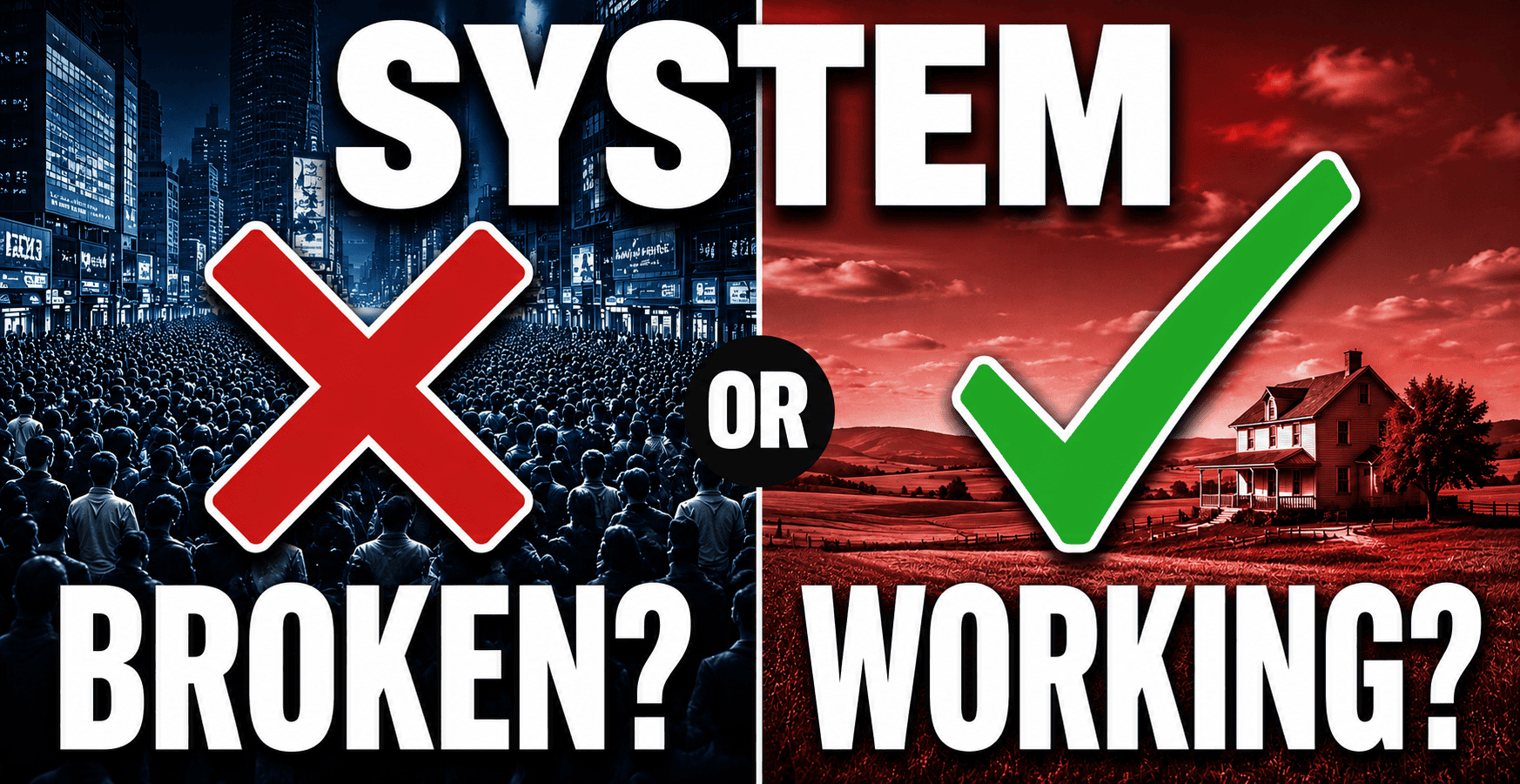
The Ultimate Debate: Is the System Working or Broken?
The Case for “System Working”
Proponents of the Electoral College argue that the system still serves its original purpose as a vital stabilizing force for a diverse, geographic republic:
- Prevents “Metropolitan Dominance”: Without it, candidates might focus exclusively on high-density population centers like New York, Los Angeles, and Chicago, ignoring rural and heartland America entirely.
- Forces Broad Coalitions: A candidate cannot win by simply racking up massive margins in one specific region; they must build a broad geographic coalition across many different states.
- Provides Election Certainty: In a razor-thin election, disputes and recounts are safely contained within individual states rather than triggering a chaotic, nationwide recount.
- Prevents regional candidates from dominating. A candidate popular in just one part of the country has a harder time reaching 270.
The Case for “System Broken”
Critics argue that the system has aged into an undemocratic relic that actively harms American civic health:
- Subverts “One Person, One Vote”: It creates unequal voting power based purely on geography, violating a core democratic tenet.
- Silences Millions of Voters: If you are a Republican in deep-blue California or a Democrat in deep-red Texas, your vote effectively feels meaningless, which actively depresses voter turnout in “safe” states.
- The “Battleground” Obsession: Modern campaigns completely ignore the vast majority of the country. In recent elections, over 90% of campaign events and spending have been jammed into just a handful of swing states.
- Five presidents won without the popular vote. That’s nearly 10% of all U.S. presidencies.
The Honest Tension
The debate is not simply about whether the Electoral College is “good” or “bad.” It reflects two different ideas about presidential elections.
Should the system primarily represent individual voters across the entire country—or should it preserve a formal role for states as political units? The Electoral College attempts to combine both principles, but Americans disagree about whether that balance remains fair.
The debate today is less about the original formula itself and more about whether a system designed for 1787 still produces the fairest outcome in the twenty-first century.
Can Congress Simply Eliminate the Electoral College?
Not by passing an ordinary federal law. Because the Electoral College is established by the Constitution, eliminating it would almost certainly require a constitutional amendment.
However, states have constitutional authority to decide how they appoint their electors. That is why reforms such as the district system or the National Popular Vote Interstate Compact focus on changing state allocation rules rather than formally abolishing the Electoral College.
The Modern Push for Reform
Because amending the Constitution is extremely difficult, some reformers have pursued another approach: changing how states award their electoral votes without formally abolishing the Electoral College.
| Compact Status | Details |
|---|---|
| States Enacted | 18 states plus Washington, D.C. |
| Electoral Votes Committed | Approximately 222 of the 270 required |
| Latest Addition | Virginia |
| Still Needed | Approximately 48 additional electoral votes |
Supporters Say
The compact would ensure that the candidate receiving the most votes nationwide becomes president while still using the constitutional authority states already possess to appoint electors.
Critics Say
The compact would significantly change how the Electoral College operates without using the formal constitutional-amendment process and could create new legal or administrative disputes.
What This Means for You
The Electoral College asks a fundamental question: Should presidential elections prioritize individual voters, the political role of states, or some balance between the two?
Reasonable people answer that question differently. Understanding how the system works—including its mathematics, history, and practical effects—is the first step toward deciding whether it should remain the same or change.
What You Can Do
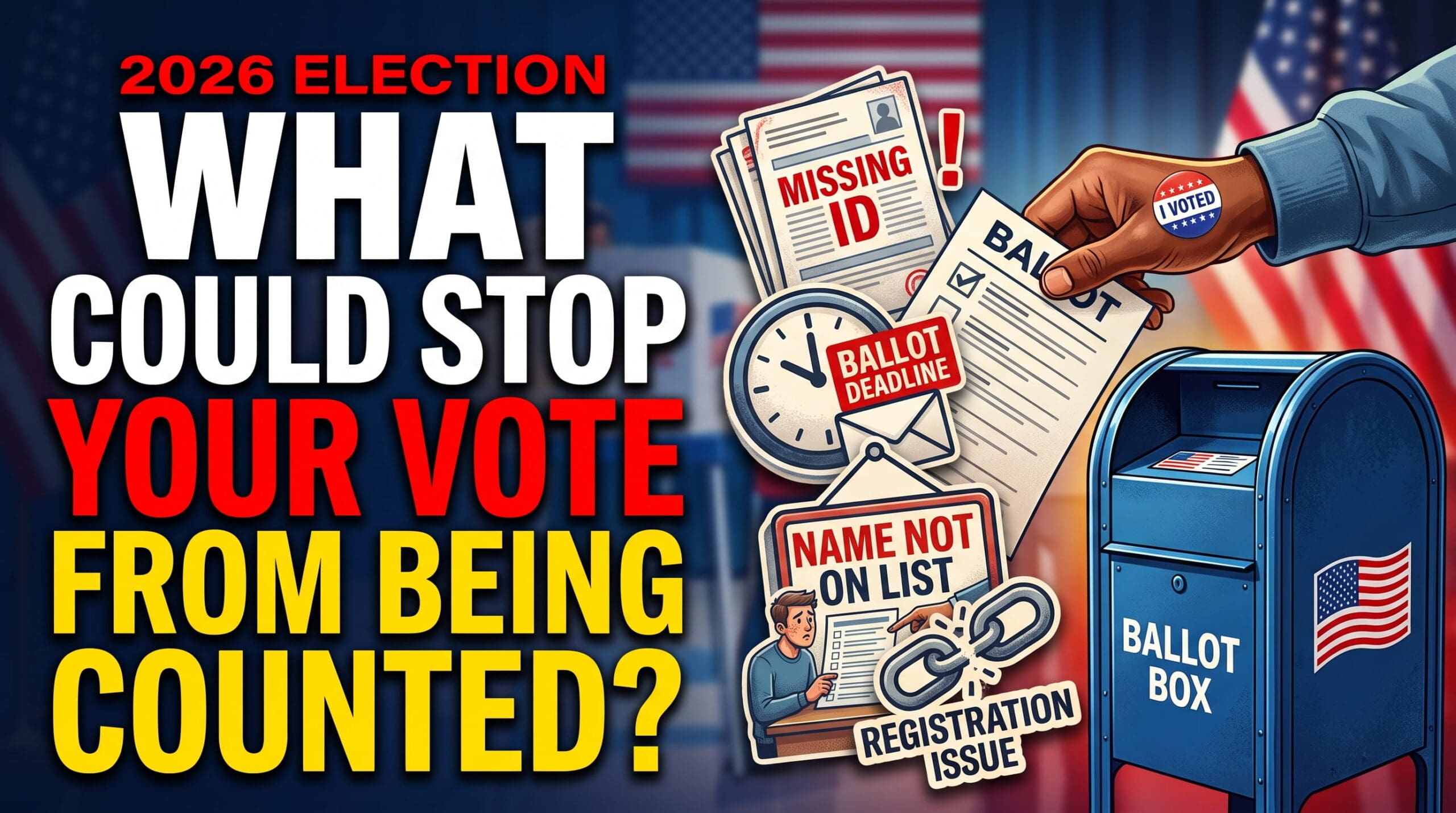
Check Your Registration
Confirm that your voter registration is current before your state’s deadline.
Learn Your State’s Rules
Registration deadlines, early voting, identification requirements, and mail-voting rules vary by state.
Voice Your Opinion
Contact your state legislators if you have a position on electoral-vote allocation or the National Popular Vote Interstate Compact.
💬 Join the Discussion
Should the United States keep the Electoral College, modernize it, or replace it with a national popular vote?
Could a middle-ground approach—such as the Maine-Nebraska district model—work across all 50 states?
If you are a VoteView member, share your thoughts in the comments.
Related Articles
- [Coming soon: How Congress Counts Electoral Votes — and What Happened on January 6th]
- [Coming soon: The Three-Fifths Compromise — How Slavery Shaped American Democracy]
- [Coming soon: Your Voting Rights Timeline — From 1787 to Today]
- How a Bill Becomes a Law
- What is Federalism
Further Read
- National Archives
- Constitution Annotated
- National Conference of State Legislatures
- Federal Election Commission

No discussions yet
Be the first to join the discussion and share your thoughts with the community.