
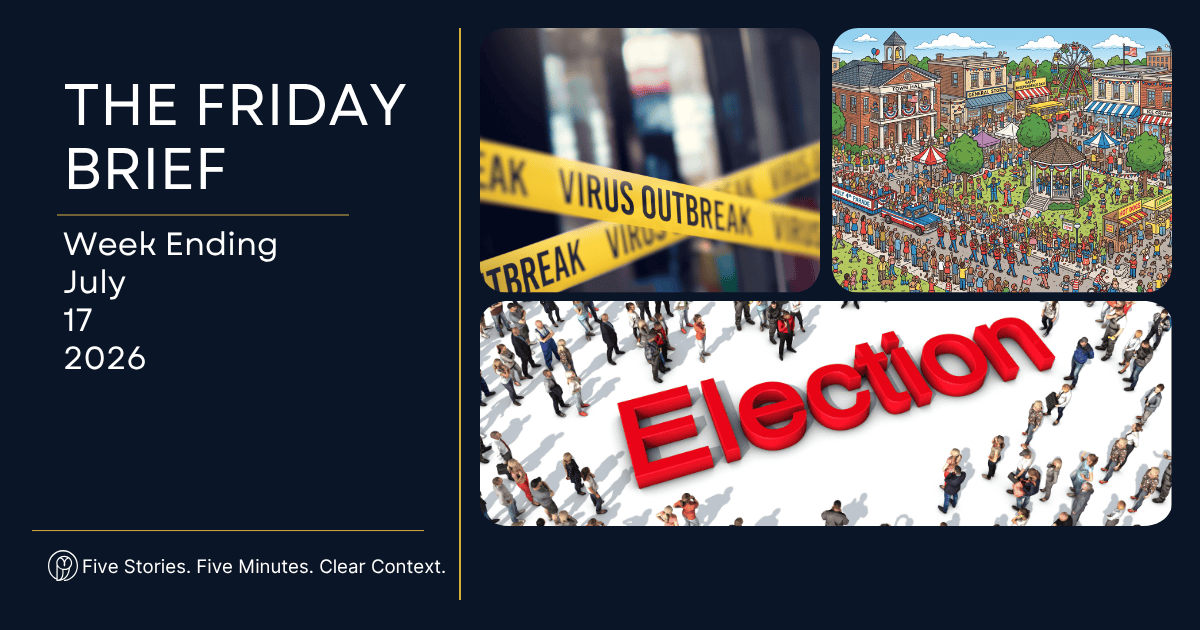
This Week in Current Events: Election Security, War Powers, AI and Public Health
Week of July 10–17, 2026
This week was defined by questions about power. From election administration and war powers to congressional funding, artificial intelligence, and executive authority, the headlines highlighted how decisions made in government—and the technologies we use to understand them—can have lasting effects on our daily lives.
At VoteView News, our goal is to keep you fully informed without the accompanying anxiety. Here are the top five stories for the week of July 10–17, 2026, explained through what happened, why they matter, and what to watch next.
📚 This Week’s Civics Lessons
Every headline tells us what happened. At VoteView, we also explain how government works behind the headlines.
Election administration and federalism: Who runs American elections, and how much authority does the federal government have?
Presidential war powers: How far can a president go before Congress must act?
Budget reconciliation: Why can certain legislation move through the Senate with a simple majority?
Artificial intelligence and media literacy: How do we evaluate photographs and other evidence in an age of deepfakes?
Public-health infrastructure: How do federal and state agencies coordinate across state lines?
By the end of this briefing, you will understand not only the headlines—but also the systems behind them.
1. President Trump Delivers a Prime-Time Address on Election Security
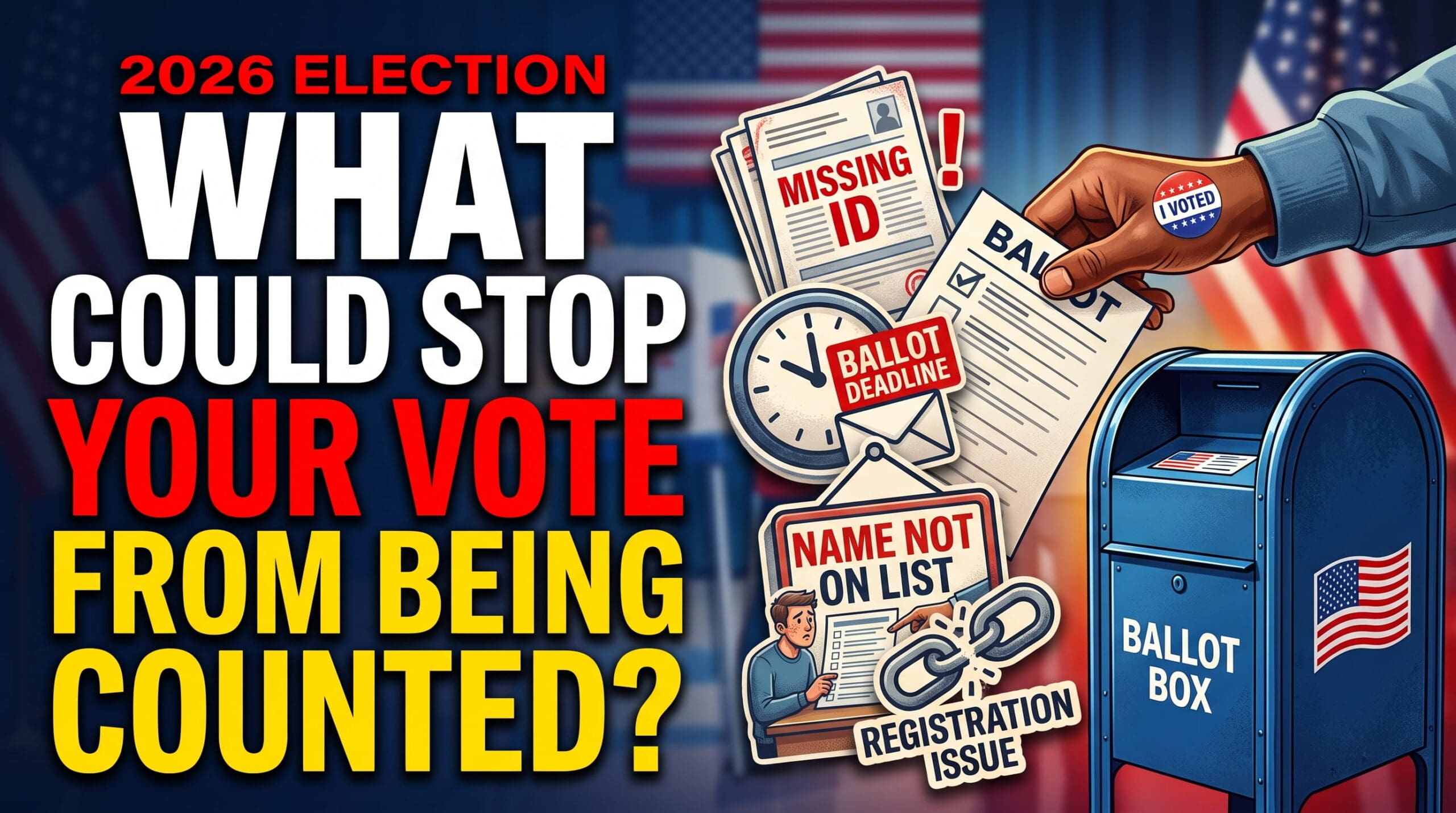
What happened: On Thursday night, President Trump delivered a White House address focused on election security. He repeated disputed claims about the 2020 election, promoted national voter-identification requirements, and criticized television networks that chose not to carry the speech live on their broadcast channels. CNN, ABC, and NBC offered coverage through digital or streaming platforms instead. Trump responded by calling for the networks’ broadcast licenses to be revoked.
Why it matters: Elections in the United States are primarily administered by state and local governments, although Congress can establish some national rules. A push for broad federal election requirements raises questions about federalism and the division of authority between Washington and the states. The dispute over television coverage also raises a separate constitutional issue: elected officials may criticize editorial decisions, but the First Amendment limits government retaliation against news organizations.
Read Reuters reporting on the address and network response →
2. The U.S.–Iran Conflict Escalates After the Ceasefire Collapses
What happened: The fragile ceasefire between the United States and Iran collapsed, followed by consecutive nights of U.S. airstrikes on Iranian military and transportation infrastructure. Iran retaliated with missile and drone attacks across the region, including strikes directed toward bases and facilities used by the United States and its allies. The renewed fighting also disrupted shipping near the Strait of Hormuz and pushed energy prices higher.
Why it matters: The Constitution gives Congress the power to declare war and fund military operations, while the President serves as Commander-in-Chief. In practice, presidents have often initiated or expanded military action before Congress has voted on a formal declaration of war. The conflict illustrates how quickly executive decisions can deepen American involvement—and how difficult it can be for Congress to exercise its constitutional check after operations are already underway.
3. House Republicans Advance a $95 Billion Iran War Package
What happened: The House Budget Committee advanced a $95 billion package combining funding for the Iran conflict, intelligence operations, agricultural assistance, and election administration. The measure passed the committee on a party-line vote and now faces an uncertain path through the full House and Senate. Republican leaders are seeking to move the package through the budget-reconciliation process, which can allow qualifying legislation to avoid a Senate filibuster.
Why it matters: Budget reconciliation is not simply another name for a spending bill. It is a special congressional procedure with strict rules about taxes, spending, and the federal budget. If the package satisfies those rules, it could eventually pass the Senate with a simple majority rather than the 60 votes normally needed to overcome a filibuster. The debate shows how parliamentary procedure can determine whether a major national policy survives—even before lawmakers debate the policy itself.
4. “Where’s Mitch?”: A Hospital Photo Sparks New Questions About Trust Online
What happened: After a lengthy public absence following a June fall, Senator Mitch McConnell’s office released a statement and a photograph showing him in a hospital bed with a recent copy of The Washington Post. Digital-forensics experts who examined the image reported no evidence that it was generated or structurally altered by artificial intelligence. Even so, skepticism continued online, with some users demanding video or additional proof.
Why it matters: A formal statement and official photograph once carried considerable weight. Today, realistic AI-generated images, cloned voices, and manipulated video have changed the public’s baseline of trust. Healthy skepticism is valuable, but automatic disbelief can be exploited just as easily as blind acceptance. Media literacy now requires checking the original source, looking for independent verification, distinguishing evidence from speculation, and resisting the urge to share before a claim is confirmed.
🎥 Related Video
Inside Edition examines why the photograph generated so much online suspicion and why some viewers continued to question it even after experts found no evidence of AI manipulation.
Watch: “Some Question If Senator Mitch McConnell’s ‘Proof-of-Life’ Photo Is Real” →
5. Nationwide Cyclospora Outbreak Is Linked to Lettuce Served at Taco Bell
What happened: Federal investigators linked a multistate outbreak of cyclosporiasis to shredded iceberg lettuce served at Taco Bell restaurants in Indiana, Kentucky, Michigan, Ohio, and West Virginia. The contaminated lettuce was traced to a supplier connected to a farm in Mexico. Taco Bell removed the product from affected locations, while the CDC and FDA continued investigating whether additional businesses or products were involved. Michigan reported the largest number of illnesses.
Why it matters: Food does not stop at state borders, so public-health investigations cannot stop there either. State health departments identify local cases, the CDC looks for patterns across jurisdictions, and the FDA traces products through farms, suppliers, distributors, and restaurants. The outbreak demonstrates why interstate public-health infrastructure matters: no single state can fully investigate a national supply chain on its own.
Almost Made It
These stories did not make the Top 5, but they reveal important questions about government ethics, institutional independence, and how legislation becomes law.
Treasury Tax Official Leaves After Clashes Over IRS Independence
What happened: Kenneth Kies, the Treasury Department’s assistant secretary for tax policy and acting chief counsel of the IRS, left the administration following disputes with White House officials. Reporting indicated that Kies had warned officials about federal restrictions on political interference in specific IRS audits.
Why it is worth watching: The IRS has enormous power to examine private financial information and enforce tax law. Federal safeguards intended to separate individual audits from political influence grew out of earlier abuses of presidential power. Any conflict over those safeguards raises questions about whistleblowers, institutional independence, and whether laws designed to prevent politicized enforcement are working.
Bipartisan Housing Affordability Bill Becomes Law Without a Presidential Signature
What happened: A broad bipartisan housing bill became law after President Trump neither signed nor vetoed it within the Constitution’s ten-day review period while Congress remained in session. The legislation is designed to encourage housing construction and remove regulatory barriers that can slow development.
Why it is worth watching: A president does not always have to sign a bill for it to become law. Under Article I, Section 7 of the Constitution, a bill generally becomes law after ten days—excluding Sundays—if the president takes no action and Congress remains in session. The unusual outcome offers a real-world lesson in the lawmaking process and shows that bipartisan legislation can still move through a closely divided Congress.
📺 Featured Video of the Week
PBS NewsHour | July 16, 2026
For a calm, evening-news-style review of the week, PBS NewsHour’s July 16 broadcast provides additional reporting on the election-security address, the expanding U.S.–Iran conflict, and other major national and international developments.
Think About It
Election rules are usually administered locally, but debates about election security are increasingly national. Which election standards should be consistent across the country, and which decisions should remain with states?
Congress controls military funding, yet presidents can act quickly as Commander-in-Chief. At what point should continued military action require a new and specific vote from Congress?
AI makes false evidence easier to create—but it also makes people more willing to dismiss real evidence as fake. How should public officials establish credibility when photographs, audio, and video are no longer automatically trusted?
Continue Learning
- Civics 101: Federalism
- Civics 101: Checks and Balances
- Civics 101: How a Bill Becomes a Law—and What Happens After Passage
🗳️ Coming Soon in Civics 101
This week’s headlines raised an important question: Who actually runs America’s elections?
Next, VoteView will explore How Voting Is Administered in the United States—including the roles of local election officials, state governments, Congress, federal agencies, and the courts.
Because understanding the system is the first step toward participating in it.
Sources and Further Reading
- Reuters: Trump’s election-security address and network response
- The Guardian: Television coverage decisions
- Associated Press: U.S.–Iran escalation and infrastructure strikes
- Reuters: Regional attacks and the Strait of Hormuz
- Associated Press: $95 billion House package
- The Independent: Digital-forensics review of McConnell photograph
- Snopes: Claims surrounding the McConnell image
- Associated Press: Cyclospora outbreak source
- CDC: About cyclosporiasis
- The Wall Street Journal: Kenneth Kies and IRS audit safeguards
- Associated Press via ABC: Housing bill becomes law without signature
- PBS NewsHour: July 16, 2026 full episode
Why This Week Matters
This week’s stories were different on the surface, but each came back to the same question: Who has power, and what limits that power?
The President challenged state authority over elections and exercised military power abroad. Congress turned to specialized budget rules to shape war funding. The public struggled to decide whether official evidence could still be trusted. Health agencies coordinated across state lines to trace a national outbreak. Even a bill that the President declined to sign demonstrated how the Constitution can move legislation forward without executive approval.
Understanding those systems does not eliminate disagreement. It gives us a better foundation for deciding what we believe—and what government should do next.
From the Editor
Every week, VoteView filters through hundreds of headlines to bring you five stories that matter most—explained without the outrage, speculation, or endless commentary. Our goal is not to tell you what to think. It is to help you understand what is happening and why it matters.
Understand today’s headlines. Prepare for tomorrow’s conversations.
No discussions yet
Be the first to join the discussion and share your thoughts with the community.