
Why the U.S. Government Was Designed to Share Power
Opening
Checks and balances may sound like a complicated constitutional concept, but the basic idea is familiar. Have you ever worked on a group project with someone who tried to make every single decision without asking anyone else? It is frustrating—and it shows what can happen when one person has too much control.
Now imagine that same person got power to control an entire country—along with the power to write laws, command the military, and throw people in jail without any good reason.
That was the exact nightmare America’s Constitution creators wanted to avoid. They had just fought a tough war to escape King George III, and they were terrified of making a new American king.
They needed a government strong enough to keep the country together—but not so powerful that any single person or institution could rule alone.
To solve this problem, they created a brilliant, sometimes messy system called checks and balances.
📊 The Bigger Picture
|
Before diving into the mechanics, let’s put this in historical context: |
||
|
Year |
Event |
Why it Matters |
|
1776 |
Declaration of Independence |
Colonies broke from British rule |
|
1781 |
Articles of Confederation |
First go at government—failed miserably |
|
1787 |
Constitutional Convention |
Leaders met in Philadelphia to fix the mess |
|
1789 |
U.S. Constitution Takes Effect |
New three-branch government begins officially |
🥊 Two Hard-Won Lessons
- Two Hard-Won Lessons From Britain: Too much power concentrated in one place leads to tyranny.
- From Their First Try (Articles of Confederation): Without clear rules and central leadership, a government falls apart.
The Framers realized they had to walk a tightrope: create a government strong enough to function, but weak enough that no one branch could dominate. That's where separation of powers comes in.
💡 Two Ideas That Work Together
People often use separation of powers and checks and balances interchangeably, but they represent two distinct constitutional concepts:
- Separation of Powers answers Who does what? The Constitution divides tasks: Congress writes laws, the President enforces laws, and the Courts interpret laws.
- Checks and Balances answers How do they keep each other from becoming too powerful? The Constitution gives each branch specific tools to limit and oversee the actions of the other two.
Part I: The Three Branches and How They Interact
The Constitution divides the federal government into three distinct branches, each given a specific job and the constitutional authority to hold its ground.
|
Branch |
Primary Job |
Who’s In It? |
Constitutional Base |
|
Legislative |
Makes laws |
Congress (Senate & House) |
Article I |
|
Executive |
Enforces laws |
President, VP, & Cabinet |
Article II |
|
Judicial |
Interprets laws |
Supreme Court & Lower Federal Courts |
Article III |
Bottom Line
Every branch has clear power—and clear limits. No branch operates entirely on its own.
⚖️ What Exactly Is a “Check”?
A check is simply one branch’s ability to limit another branch’s power.
The Constitution gives each branch different tools to do this. Let’s see what those tools look like in practice.
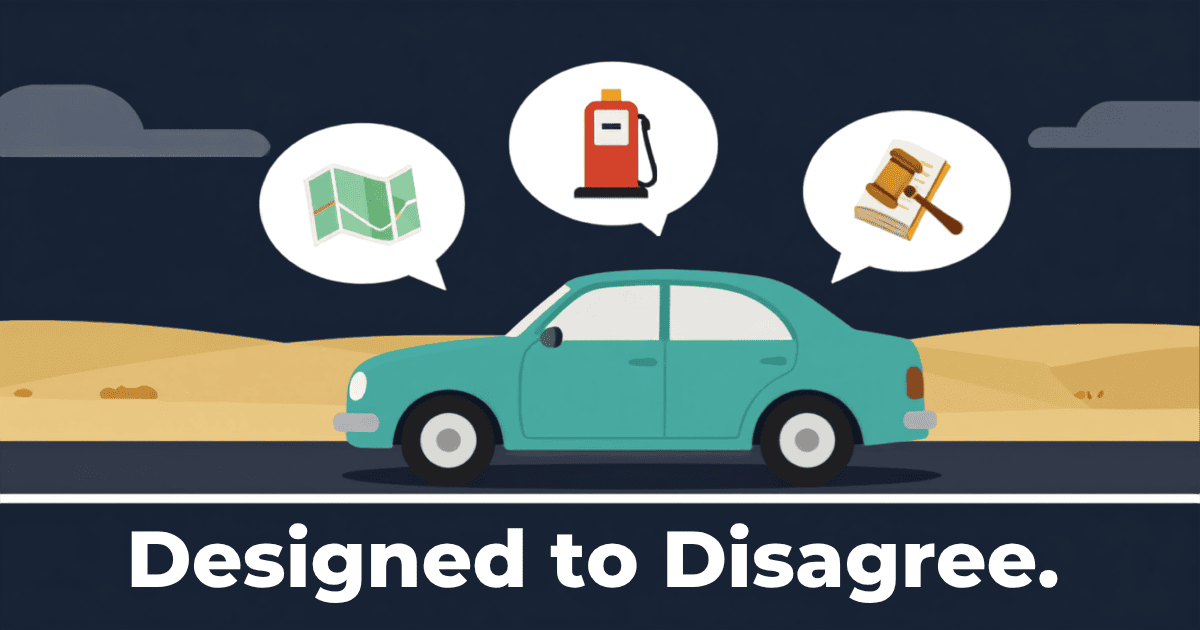
🚗 Everyday Analogy: The Road Trip Team
Imagine three friends planning a cross-country trip:
|
Friend |
Role |
Power |
|
Navigator (Legislative) |
Maps the route, sets budget |
Can cut off gas money |
|
Driver (Executive) |
Drives the car |
Decides speed and stops |
|
Referee (Judicial) |
Holds the rulebook |
Pulls over for speeding |
- If the Driver takes a wild turn, the Navigator cuts the gas money.
- If the Driver speeds, the Referee pulls them over.
- No single personcan run the entire trip alone.
Part II: The Checks and Balances Toolkit
This is where most political battles happen. Here’s how Congress holds the Executive Branch accountable:
🔐 How Congress Checks the Executive and Judiciary
- Power of the Purse: The President cannot spend public money unless Congress approves the budget.
- Veto Overrides: If the President rejects a bill, a 2/3 majority vote in both chambers of Congress can pass it anyway.
- Advice and Consent: The Senate must vet and approve presidential appointments and treaties.
- Judicial Design & Confirmations: Congress determines the structure and funding of the federal courts and retains the power to confirm or reject federal judges.
🔑This is where most political battles happen. Here's how Congress holds the Executive Branch accountable.
✍️ How the President Checks Congress and the Judiciary
It works both ways! The President isn’t powerless against Congress.
- The Veto: The President can refuse to sign bills passed by Congress, sending them back to the legislative branch.
- Judicial Nominations: The President selects all federal judges and Supreme Court justices when vacancies arise.
- Enforcement Control: Because the courts have no independent military or police force, they rely on the Executive Branch to enforce their rulings.
🏛️ How the Courts Check Both Branches
However, the Judiciary is the quietest branch but incredibly powerful.
The Judiciary holds the ultimate power of Judicial Review — the authority to strike down a law passed by Congress or an action taken by the President if it violates the Constitution. While this specific power is not explicitly detailed in the Constitution, the Supreme Court established it in the landmark 1803 case Marbury v. Madison.
|
Case |
Year |
What Happened |
|
Marbury v. Madison |
1803 |
Established judicial review |
|
United States v. Nixon |
1974 |
Court said President must hand over tapes |
|
Hamdan v. Rumsfeld |
2006 |
President couldn’t create tribunals without Congress |
|
Trump v. Hawaii |
2018 |
Travel ban survived after modifications |
|
Biden v. Nebraska |
2023 |
Student loan forgiveness blocked |
🛡️ Even so, Congress Checks the Courts
Many readers don’t realize this! Federal judges serve for life, but they’re not untouchable.
Congress’s Tools
|
Tool |
How It Works |
|
Confirming Judges |
Senate must approve every federal judge nomination |
|
Designing the Courts |
Congress decides number of lower courts and even Supreme Court justices |
|
Budget Control |
Congress sets judicial branch funding |
|
Amending Constitution |
If Court strikes down a law, Congress + states can amend Constitution to override |
|
Impeachment |
Judges can be removed for illegal or unethical behavior |
🦅 The President Checks the Courts
Presidents have leverage over the judiciary, even if they can’t directly overturn rulings.
President’s Tools
- Nominations: Picks all federal judges and Supreme Court justices
- Enforcement: Courts have no army/police—Presidents enforce rulings
- Pardons: Can forgive federal crimes after court convictions
Important: Presidents cannot simply ignore or overturn court rulings. But enforcement power gives them meaningful influence.
Part III: Real-World Friction and Institutional Stress Tests
🔄 Follow the Decision: Student Loan Forgiveness
To see checks and balances in action, consider how federal student loan forgiveness moved through all three branches.
Executive Action — 2022
President Biden directs the Department of Education to cancel billions of dollars in student debt using the HEROES Act.
Judicial Review — 2023
Opponents sue. The Supreme Court rules 6–3 that an expenditure of this scale requires explicit congressional authorization.
Legislative and Executive Pivot
The administration uses narrower, pre-existing laws for specific borrower groups while Congress continues debating broader college-affordability legislation.
What Actually Happened
The Plan: In 2022, President Biden announced up to $20,000 in student-debt cancellation per borrower using the 2003 HEROES Act without obtaining new authorization from Congress.
The Challenge: Opponents sued. In 2023, the Supreme Court ruled in Biden v. Nebraska that spending on that scale required explicit congressional authorization.
The Aftermath: The administration used narrower, pre-existing laws to forgive debt for specific borrower groups, while Congress continued debating broader college-affordability policies.
🎯 Takeaway
Even when all three branches lean the same direction politically, constitutional limits still apply.
Part IV: When the System Slows, Accelerates, or Stalls and What History Tells Us
Checks and Balances Under Stress: Alignment vs. Paralysis
When citizens scroll through the news today, it can feel like the system is under unprecedented strain. The feeling of being inundated with fast-moving political conflict is real. However, understanding history, and how the system accelerates, slows down, or stalls helps make sense of that noise. Depending on the political climate, the constitutional brakes operate differently.
When politicians fight and nothing gets done, people call it gridlock.
The Intentional Design
The Framers actually wanted government to be slow. They believed:
A slow government is a safe government. Compromise beats rash decisions.
Remember: The Framers built government to be slow. They feared concentrated power more than they feared gridlock. When nothing gets done, that can mean two very different things—and confusing those two situations is where public frustration comes from
The Modern Problem
But today, this can be dangerous:
|
Pros |
Cons |
|
Prevents extreme policies |
Too slow during national emergencies |
|
Encourages compromise |
Creates public frustration |
|
Protects minority interests |
Gridlock becomes paralysis |
|
Forces debate before big changes |
Erodes trust when nothing moves |
Bottom Line: What feels like dysfunction is often the system doing exactly what it was designed to do—forcing disagreement and debate.
In the last 25 years, it seems that we have seen the following scenarios more than once.
Scenario 1: Healthy Friction (The Slowdown)
When different parties control different branches, the system slows down. The Framers intended this; they believed a slower government forces compromise and prevents rash, extreme policies. What looks like simple gridlock is often the intentional friction of a system resisting rapid unilateral change.
|
When you hear |
What It Looks Like |
What It Actually Is |
|
Bill stalled in Congress |
“Nothing’s happening!” |
Compromise hasn’t been reached yet |
|
President’s plan blocked by Court |
“Justice overreach!” |
Constitutional boundary enforced |
|
Veto overrides fail |
“Gridlock again!” |
⅔ threshold wasn’t met on purpose |
|
Funding bills delayed |
“Government shutdown threat” |
Spending priorities being negotiated |
Scenario 2: Institutional Alignment (The Acceleration)
Checks and balances don’t require every branch to disagree. They require every branch to retain the ability to disagree.
The Constitution allows periods of unified government. The real test is whether each branch remains willing and able to exercise its independent constitutional responsibilities when necessary.
When one political party controls multiple branches of government, the constitutional system does not automatically stop working. However, many of the internal disagreements that normally slow decision-making may become less frequent. As a result, many Americans begin asking whether the constitutional safeguards are functioning as intended—or simply operating differently than they are accustomed to seeing.
At the time of publication, the presidency and both chambers of Congress are controlled by Republicans, while the Supreme Court has a 6–3 conservative majority. That does not make the judiciary an official arm of a political party. However, when elected branches are aligned and the Court’s majority is broadly sympathetic to many of the same legal theories, the usual institutional friction may weaken.
|
Branch |
Who Controls |
What This Means |
|
Executive |
President Trump (Republican) |
Can propose and enforce policy freely |
|
Legislative |
Republican-controlled Congress |
Fewer internal legislative barriers |
|
Judicial |
Conservative 6–3 majority |
Alito & Thomas never ruled against Trump this term |
Source: USA Today, July 2026
The Consequence: When there’s only one party across all branches, the normal internal friction disappears. Courts become the only remaining brake—and that creates tension.
Recent Example: Trump v. Slaughter (2026)
|
Case |
Ruling |
What Happened Next |
|
Trump v. Slaughter |
6–3, President can fire independent agency officials |
Trump fired 50+ federal officials; dismantled bipartisan Election Assistance Commission |
According to The Guardian, fired officials called the ruling a “dagger in the heart” of the civil service.
By contrast,this isn’t gridlock—this is acceleration. When all three branches align, the system moves faster than designed.
Scenario 3: Political Paralysis (The Stall)
When intense polarization reaches a point where compromise stops being politically viable, the system stalls entirely. Representatives may fear intra-party challenges more than legislative failure, leading to a cycle where the executive branch bypasses Congress, the courts are forced to step in, and public trust erodes.
Public Confidence and the Courts
This rapid institutional shift has put a spotlight on the Supreme Court itself, fueling intense public debate over its role and its accountability:
|
Context & Documented Facts |
The Public Debate |
|
Ethics Disclosures: Financial disclosures filed in 2025 highlighted personal travel and gifts accepted by several justices, including Justices Alito and Thomas, while Chief Justice Roberts reported none. |
Questions of Legitimacy: Critics and a growing political movement call for institutional overhauls, such as term limits or court expansion, arguing that transparency gaps erode the court’s appearance of neutrality. |
|
Voting Patterns: Data from the most recent term shows that Justices Alito and Thomas did not rule against the administration in high-profile executive authority challenges. |
Perceptions of Alignment: This consistency leads defenders to argue the rulings reflect a principled adherence to constitutional text, while critics view it as structural alignment with a political party. |
Sources: Bloomberg Law News, WKNO FM, July 2026
Important Distinction: Many Americans suspect corruption, but formal investigations have not proven bribery or quid-pro-quo payments. The gap between suspicion and proof is where public trust erodes fastest.
The Evergreen Challenge In moments of rapid political change, it is completely natural for the public to question whether the system is working as intended. The constitutional system was not built to eliminate political conflict, but to channel it into peaceful, institutional arenas. The question that remains evergreen across American history is whether the independent branches retain the willingness to exercise their checking authority, and whether an informed public remains willing to hold them to account.
Editor’s note: This section describes constitutional debates, court rulings, public concerns, and institutional relationships as they existed when this article was published. Future elections, legislation, investigations, disclosures, and court decisions may change how historians ultimately evaluate this period.
Checks and Balances in History: Have We Been Here Before?
When citizens watch the news today, the rhetoric can feel existential. From one side, there are warnings that America is sliding into an authoritarian government; from the other, warnings that the nation is on the path to becoming a communist country. It is common to hear comparisons to the fall of the Roman Empire, sparking fears that a total collapse is inevitable.
American history has experienced repeated periods when many citizens believed the constitutional system was on the verge of failure. Each era had different causes, different leaders, and different outcomes—but each tested whether checks and balances could withstand intense political pressure.
- The 1930s (FDR and the New Deal): Facing the Great Depression, Democrats held the presidency and massive majorities in Congress. They passed sweeping laws that fundamentally reshaped the economy. Critics fiercely accused President Franklin D. Roosevelt of dragging America into communism and destroying free enterprise. When the Supreme Court tried to block his programs, FDR attempted to “pack the court” by adding six new justices. The public and Congress pushed back against the executive overreach, and the system eventually stabilized.
- The 1860s (The Civil War): The ultimate breakdown of the system occurred when the country fractured over slavery. President Abraham Lincoln wielded unprecedented executive power to preserve the Union, even suspending core constitutional rights like habeas corpus. Critics labeled him a tyrant and a dictator, yet the constitutional framework was rebuilt after the war.
History Doesn’t Guarantee Collapse
While historical empires like Rome did collapse, they did so primarily because their internal institutions broke down, political compromise was abandoned, and citizens stopped participating in the governance of their state.
History proves that America’s system is incredibly resilient, but resilience has never meant automatic success. It depends on institutions performing their constitutional roles and citizens remaining engaged in civic life.
Ultimately, democracy is not a spectator sport, and checks and balances do not maintain themselves. It takes continuous, active work from the population. To keep the system balanced, citizens must remain informed, resist the urge to tune out due to media fatigue, and consistently participate in elections at every level. The constitutional tools are only as powerful as the people willing to use them.
Part V: Navigating the News
When political debates dominate the headlines, understanding the underlying institutional mechanics helps separate systemic design from political dysfunction.
So the Next Time You Hear…
|
If You Hear… |
Consider Asking… |
Why It Matters |
|
“Nothing gets done.” |
Is this deliberate compromise or political paralysis? |
Slow government can be either a feature or a warning sign. |
|
“The President has too much power.” |
Are the other branches exercising their constitutional powers? |
Checks and balances depend on each branch remaining independent. |
|
“The Courts are deciding everything.” |
Did the elected branches leave the issue unresolved? |
Courts often act when constitutional disputes remain unanswered. |
|
“The system is rigged.” |
Is the concern about disagreement, accountability, or public trust? |
Different problems require different constitutional solutions. |
So the Next Time Someone Asks…
|
If someone asks… |
You can explain… |
|
“Can the President just ignore Congress?” |
No. Congress controls funding, conducts oversight, and can impeach. Courts can also block actions that exceed constitutional authority. |
|
“Why doesn’t Congress stop it?” |
Congress has constitutional tools, but how effectively they’re used often depends on elections, political incentives, and public support. |
|
“Why doesn’t the Supreme Court just fix everything?” |
Courts resolve legal disputes—they don’t write laws or govern the country. |
|
“Why doesn’t government move faster?” |
The Constitution intentionally slows major decisions so that no single branch can dominate. |
Now You Can Explain It
Part VI: What This Means for You
🎯 Final Takeaway
In the end, the Framers of the Constitution expected disagreement. Instead of concentrating power in one branch, they created a system where each branch could limit the others.
While this often slows decision-making, it also protects against power concentration and encourages debate before major national decisions are made.
Checks and balances were never meant to guarantee perfect government. They were designed to make peaceful correction possible. Every generation has faced moments when Americans questioned whether the system was working. The enduring question is not whether the Constitution will face stress—it always has—but whether citizens and institutions remain willing to use the constitutional tools available to restore balance.
It’s messy. It’s loud. It’s slow.
And its strength has never been perfection—it has been the ability to correct itself without abandoning the Constitution.
Reference & Discussion
 Discussion Prompts
 Discussion Prompts
(For your blog comment section)
- When have you felt government gridlock helped or hurt your community?
- Do you think the system is too slow, or just right for protecting democracy?
- Which branch do you think currently has the most power? Why?
- What reforms would you make to improve checks and balances?
- When you hear “the system isn’t working,” do you think:
- The Framers’ design is outdated?
- Politics has corrupted the design?
- Both?
Share your take below.
Remember You Have the Power
 Remember You Have the Power
|
Action |
Impact |
|
Stay informed |
Read multiple sources on government actions |
|
Vote in all elections |
Local, state, and federal races affect checks and balances |
|
Contact representatives |
Let them know you care about constitutional governance |
|
Join civics organizations |
Groups like League of Women Voters promote civic education |
Glossary
Terms in This Article
Checks and Balances
System where each branch can limit the others
Separation of Powers
Division of government into three distinct branches
Veto
President's power to reject bills from Congress
Judicial Review
Courts' power to strike down unconstitutional laws/actions
Impeachment
Process to accuse/remove officials (House charges, Senate tries)
Override
Congress passing a law despite presidential veto (needs ⅔ vote)
Oversight
Congress investigating Executive Branch actions
Constitution
Supreme law of the land, establishes government framework
Related Articles
No discussions yet
Be the first to join the discussion and share your thoughts with the community.