
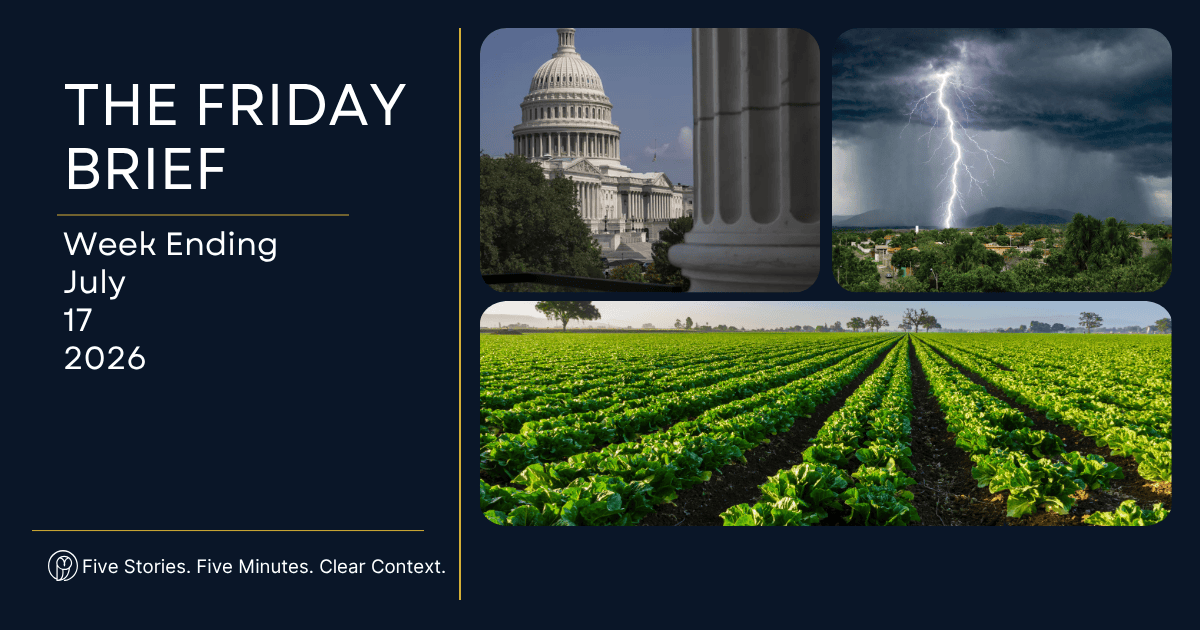
This week’s biggest stories shared a common thread: how government responds when national security, public safety, economic priorities, and emergency powers collide.
From the expanding conflict in the Middle East and a major defense spending package to a nationwide food recall, a Gulf Coast storm, and new use of the Defense Production Act, this week’s headlines showed how decisions made in Washington can quickly reach military families, grocery aisles, energy markets, and local communities.
At VoteView News, our goal is to keep you fully informed without the accompanying anxiety. Here are the top five stories for the week of July 17–24, 2026—explained through what happened, why it matters to you, and the civics connection behind the headline.
📚 This Week’s Civics Lessons
Every headline tells us what happened. VoteView also explains how government works behind the headline.
- War Powers: How presidential military authority intersects with Congress’s constitutional responsibilities.
- The Power of the Purse: How Congress uses spending decisions to shape national policy.
- Federal Regulatory Oversight: How agencies coordinate across state lines to protect public health.
- Federalism in a Crisis: How local, state, and federal governments divide responsibility during disasters.
- Delegated Emergency Powers: How laws such as the Defense Production Act give executive agencies authority to act.
This Week at a Glance
Escalating U.S. military involvement in the Middle East
Defense spending and emergency funding
Foodborne illness and a Gulf Coast storm
Who has authority—and who pays?
The Top Five Stories of the Week
Story 1
U.S. Military Casualties in Jordan and the Escalating Middle East Conflict
What Happened
Following enemy drone and missile strikes at bases in Jordan and Iraq between July 17 and July 19, four U.S. service members were killed and dozens were injured. On Wednesday, July 22, President Trump and top defense officials attended a dignified transfer ceremony at Dover Air Force Base. The strikes marked a sharp escalation in regional hostilities, with the administration weighing further retaliatory actions.
Why It Matters to You
Expanding military operations can affect federal budget priorities, gas and energy prices, and the military families and communities connected to deployed service members.
🔑 Civics Connection: This story highlights the tension between executive commander-in-chief powers and congressional war powers. Article II gives the President authority to direct military operations, while Article I gives Congress the power to declare war and fund long-term military campaigns.
Story 2
House Passes $1.15 Trillion Defense Spending and $95 Billion Supplemental Package
What Happened
On Thursday, July 23, the House of Representatives voted to pass a $1.15 trillion defense authorization bill alongside a $95 billion supplemental budget package. The supplemental legislation provides emergency funding for ongoing overseas military operations while drawing from domestic spending offsets. The bills now head to the Senate.
Why It Matters to You
Federal budget decisions determine where tax dollars flow—whether toward national security and defense contracting or domestic programs such as infrastructure, healthcare, and nutrition assistance.
🔑 Civics Connection: This story illustrates Congress’s “power of the purse.” Through appropriations, lawmakers can support, limit, or reshape executive policy. Spending bills often become the main venue for negotiation and policy trade-offs.
Story 3
Expansion of the Nationwide Cyclospora Produce Recall
What Happened
The FDA and CDC expanded safety advisories following a major outbreak of Cyclospora infections linked to Mexican-sourced iceberg lettuce distributed by Taylor Farms. The voluntary recall spans 34 states and affects major grocery chains such as Walmart as well as food-service locations including Taco Bell.
Why It Matters to You
Food safety recalls can affect weekly grocery shopping, restaurant choices, household health, and the availability of common products.
🔑 Civics Connection: This is a case study in federal regulatory oversight and administrative law. Agencies such as the FDA and CDC use authority granted by Congress to monitor cross-state supply chains, investigate outbreaks, and coordinate public health responses.
Story 4
Tropical Storm Bertha Makes Landfall Along the Gulf Coast
What Happened
Tropical Storm Bertha made landfall in Louisiana this week, bringing heavy rainfall, storm surge, and localized flooding before moving inland. Emergency declarations were issued across vulnerable parishes, testing local flood defenses and regional power grids.
Why It Matters to You
Severe weather creates immediate safety concerns, power outages, travel disruptions, property damage, and possible long-term effects on regional insurance costs.
🔑 Civics Connection: Disaster response shows federalism in action. Local emergency teams respond first, governors coordinate statewide resources and declarations, and federal agencies such as FEMA provide additional assistance when state and local capacity is overwhelmed.
Story 5
Final Rule Codified Under the Defense Production Act
What Happened
On July 17, the Department of Energy finalized procedures under the Defense Production Act to establish voluntary corporate agreements and plans of action aimed at securing critical national energy supply chains. The rule provides specific antitrust-defense protections to participating companies working to strengthen domestic energy infrastructure.
Why It Matters to You
Federal actions under the Defense Production Act can influence supply-chain stability, energy pricing, and the availability of critical materials used in consumer technologies and utilities.
🔑 Civics Connection: This is an example of delegated executive emergency power. Congress enacted the Defense Production Act of 1950, giving the executive branch broad authority to respond to national-security needs without requiring new legislation for every action.
⭐ Worth Watching
Nicolás Maduro Appears in Federal Court
Former Venezuelan leader Nicolás Maduro made a headline appearance in federal court this week following international extradition and judicial proceedings.
Civics Connection: Extraterritorial jurisdiction, international law, and the reach of the federal court system.
French Municipalities Deploy Elite Units Against Drug Gangs
Escalating municipal drug violence in southern France prompted emergency protection orders for local mayors.
Civics Connection: An international comparison involving local governance and national-security intervention.
Whistleblower Integrity Debates at Treasury
Debate continued over internal IRS audits and administrative independence following last week’s abrupt leadership exits.
Civics Connection: The inspector general system, civil-service safeguards, and the separation of political leadership from independent administration.
📺 Featured Video of the Week
PBS NewsHour
For additional context on the week’s major national and international stories, PBS NewsHour offers in-depth reporting and expert interviews without the pace of the 24-hour news cycle.
💬 Think About It
- When military operations expand without a formal declaration of war, what role should Congress play—and how quickly should it act?
- During a national emergency, how should government balance the need for rapid action with the need for transparency and public accountability?
📖 Continue Learning
These VoteView Civics 101 explainers provide more background on the systems behind this week’s headlines:
- Congress Explained — Add your internal link
- Checks and Balances — Add your internal link
- Federalism — Add your internal link
- Executive Orders — Add your internal link
- How a Bill Becomes a Law — Add your internal link
📰 Coming Soon in Civics 101
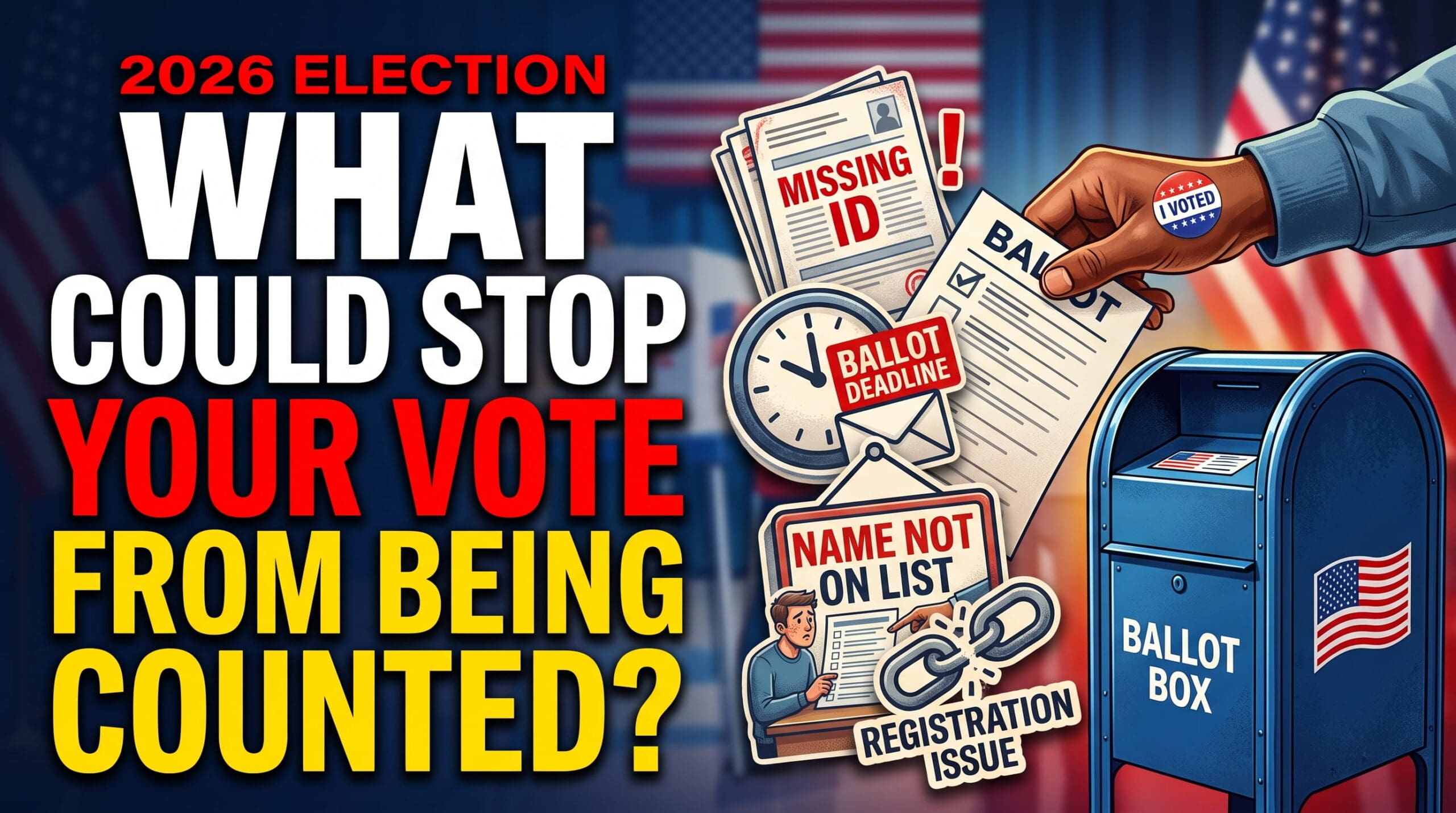
How Voting Is Administered in the United States
Who runs elections? What role does the federal government play? And why do voting rules vary from one state—and sometimes one county—to another? Our next Civics 101 explainer breaks down the system.
Further Reading
Add your direct source links to the organizations and articles used for this week’s reporting:
- U.S. Department of Defense
- U.S. House of Representatives or Congress.gov
- U.S. Food and Drug Administration
- Centers for Disease Control and Prevention
- National Hurricane Center or FEMA
- U.S. Department of Energy
- PBS NewsHour
Why This Week Matters
This week’s stories looked different on the surface, but each raised the same basic question: How much authority should government have when responding to danger—and who decides how that authority is used?
The President directed military operations abroad. Congress debated how much money to provide and where that money should come from. Federal agencies responded to a multistate food-safety threat, while local, state, and federal officials coordinated during a tropical storm. The Department of Energy relied on authority Congress granted decades ago to strengthen supply chains today.
Understanding these systems does not eliminate disagreement. It gives us a better foundation for deciding what we believe, what trade-offs we are willing to accept, and what government should do next.
From the Editor
Every week, VoteView filters through the headlines to bring you five stories that matter most—explained without the outrage, speculation, or endless commentary.
Our goal is not to tell you what to think. It is to help you understand what is happening, how government works behind the scenes, and why those decisions matter in everyday life.
No discussions yet
Be the first to join the discussion and share your thoughts with the community.