
This Week in Current Events: America at 250, NATO, Public Health and Your Wallet
Week of July 4–10, 2026
The United States began its 250th year with a week that felt both historic and unsettled. Extreme heat disrupted Independence Day traditions, NATO leaders gathered amid renewed tension over the alliance’s future, and conflict in the Middle East again placed American personnel and civilians on alert. At home, a growing foodborne illness outbreak and the one-year effects of a major federal law showed how quickly national events can reach household budgets and public health.
At VoteView News, our goal is to keep you fully informed without the accompanying anxiety. Here are five stories from July 4 through July 10, 2026, explained through what happened, why they matter, and what to watch next.
This Week at a Glance
National milestone: Extreme heat disrupted celebrations marking America’s 250th anniversary.
Global alliances: NATO displayed military coordination while political tensions remained visible.
Your wallet: The effects of a major 2025 tax law are beginning to reach paychecks and tax planning.
Public health: Michigan recorded its largest cyclosporiasis outbreak.
Security: Renewed Middle East fighting prompted a shelter-in-place alert in Jordan.
1. America’s 250th Anniversary Meets Extreme Heat
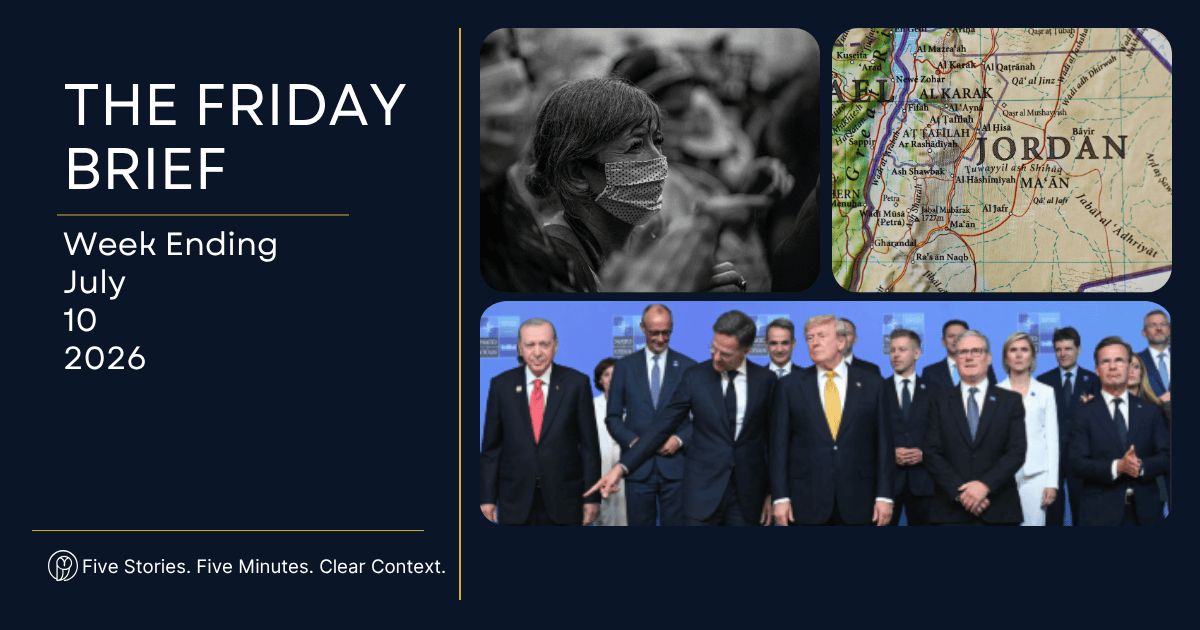
What happened: The United States marked its 250th Independence Day weekend facing a historic, dangerous heatwave along the East Coast, with heat indexes climbing past 110°F. While major events like New York’s international naval gathering proceeded, the extreme heat forced organizers to completely cancel the signature official Independence Day parades in both Washington, D.C., and Philadelphia.
Why it matters: A 250th anniversary is a massive civic milestone, but the sudden cancellations, subsequent heat-related hospitalizations, and tight security protocols highlighted the ways modern climate and infrastructure realities are actively disrupting major national traditions.
2. NATO Summit Exposes Tensions Over the Alliance’s Future
What happened: NATO leaders met in Ankara as the alliance announced major defense purchases and discussed the wars involving Ukraine and Iran. The summit turned highly contentious when President Trump threatened to immediately freeze all U.S. trade with Spain after Madrid refused to grant the U.S. military airspace access for operations regarding Iran. He further stirred the room by publicly renewing claims on Greenland and sparked a viral media storm by mistakenly referring to Japan as an “Islamic Republic.”
Why it matters: NATO decisions influence defense spending, military readiness, trade relationships, and the United States’ commitments abroad. When allies disagree publicly over territory, strategy, or burden-sharing, those disputes can affect deterrence and make international crises harder to manage—even when the alliance continues to cooperate on weapons and security.
3. One Year Later: How the “Big Beautiful Bill” Is Reaching American Wallets
What happened: President Trump signed the One Big Beautiful Bill Act on July 4, 2025. One year later, households and businesses are beginning to encounter its tax provisions, including changes involving tips, overtime, deductions, credits, and clean-energy incentives. The effects differ based on income, employment, family structure, location, and which provisions apply to a particular taxpayer.
Why it matters: Major laws rarely affect everyone in the same way or all at once. Their impact appears gradually through paychecks, tax withholding, refunds, health and energy costs, business decisions, and access to government programs. Looking at implementation—not only the political debate surrounding passage—helps voters judge whether a law is producing the outcomes its supporters promised and whether its trade-offs are becoming clearer.
4. Michigan Cyclosporiasis Outbreak Approaches 1,000 Cases
What happened: Michigan reported 992 confirmed cases of cyclosporiasis and dozens of hospitalizations as health officials investigated the largest recorded outbreak of the parasitic illness in the state’s history. Cyclospora is generally spread through food or water contaminated with fecal matter, and fresh produce has been associated with previous outbreaks. Investigators had not yet identified a single confirmed source.
Why it matters: Foodborne illness investigations show how interconnected the agricultural and retail supply chains have become. One contaminated product can cross county and state lines before health officials detect a pattern. Consumers should follow current public-health guidance, wash produce carefully, and contact a healthcare provider if persistent gastrointestinal symptoms develop—but should avoid assuming a specific food is responsible until officials confirm it.
5. Middle East Fighting Triggers U.S. Embassy Alert in Jordan
What happened: On July 9, the U.S. Embassy in Jordan issued a countrywide alert directing American personnel and citizens to seek overhead cover and shelter in place as missiles, rockets, and drones entered the region’s airspace amid renewed U.S.-Iran fighting. Jordan has long served as a comparatively stable U.S. partner in a volatile region, making a nationwide warning especially significant.
Why it matters: A shelter-in-place alert in Jordan illustrates how quickly a regional conflict can spill across borders. Beyond the immediate danger to civilians and military personnel, escalation can disrupt air travel, trade routes, diplomatic operations, energy markets, and humanitarian work. It also increases the risk that a miscalculation could draw additional countries into the conflict.
Worth Watching
Michigan Senate Debate Highlights a Democratic Party Divide
What happened: After Mallory McMorrow suspended her campaign, U.S. Representative Haley Stevens and former public-health director Abdul El-Sayed met in a contentious debate. The candidates clashed over campaign financing, Israel, political experience, and what kind of candidate can win a closely divided state.
Why it is worth watching: The August 4 primary will help determine who faces Republican Mike Rogers in a race with national implications for control of the Senate. It also reflects a wider Democratic debate between establishment-backed candidates emphasizing electability and progressive candidates calling for more fundamental change.
Implementation of the 2025 Tax Law
What happened: The federal government is releasing new guidance explaining how the 2025 law changes deductions and credits, including provisions involving tips, overtime, adoption, and tax withholding.
Why it is worth watching: Many people will not fully experience the law until they file taxes or adjust withholding. Guidance released throughout 2026 may reveal which benefits are easy to claim, which require additional documentation, and which households see the largest changes.
🎥 Featured Video
To watch a calm, evening-news-style overview of the renewed conflict with Iran and its domestic consequences, see the PBS News Hour full episode from July 8, 2026. The broadcast explains the new U.S. strikes, the end of the ceasefire, and the economic pressure created by continued instability.
Think About It
America’s 250th anniversary was shaped by both national pride and practical limits. What does the disruption of major public events reveal about the infrastructure the country will need during its next 50 years?
One year after a major federal law was signed, its effects are becoming easier to measure. Which matters more when evaluating legislation: its original promises, its immediate benefits, or its long-term costs and trade-offs?
Continue Learning
- Civics 101: How NATO Works and Why Alliances Matter
- Civics 101: How a Bill Becomes a Law—and What Happens After Passage
- Why It Matters: How Public Policy Reaches Your Household Budget
Sources and Further Reading
- America’s 250th anniversary and extreme heat
- NATO summit and defense agreements
- U.S. authorization for Ukraine to produce Patriot systems
- One Big Beautiful Bill Act tax provisions
- IRS guidance on the 2025 tax law
- Michigan cyclosporiasis outbreak
- U.S. Embassy alert and renewed Middle East fighting
- Michigan Democratic Senate debate
- Mallory McMorrow’s campaign suspension
- PBS News Hour, July 8, 2026
Why This Week Matters
This week connected national history with the challenges of governing in the present. Extreme weather altered a civic celebration. Alliance disputes raised questions about America’s role abroad. A public-health outbreak tested the food-safety system, while a year-old law began showing up in household finances. Civic life is not confined to elections or Washington. It reaches the events we attend, the food we buy, the taxes we pay, and the risks the country chooses to confront.
No discussions yet
Be the first to join the discussion and share your thoughts with the community.