
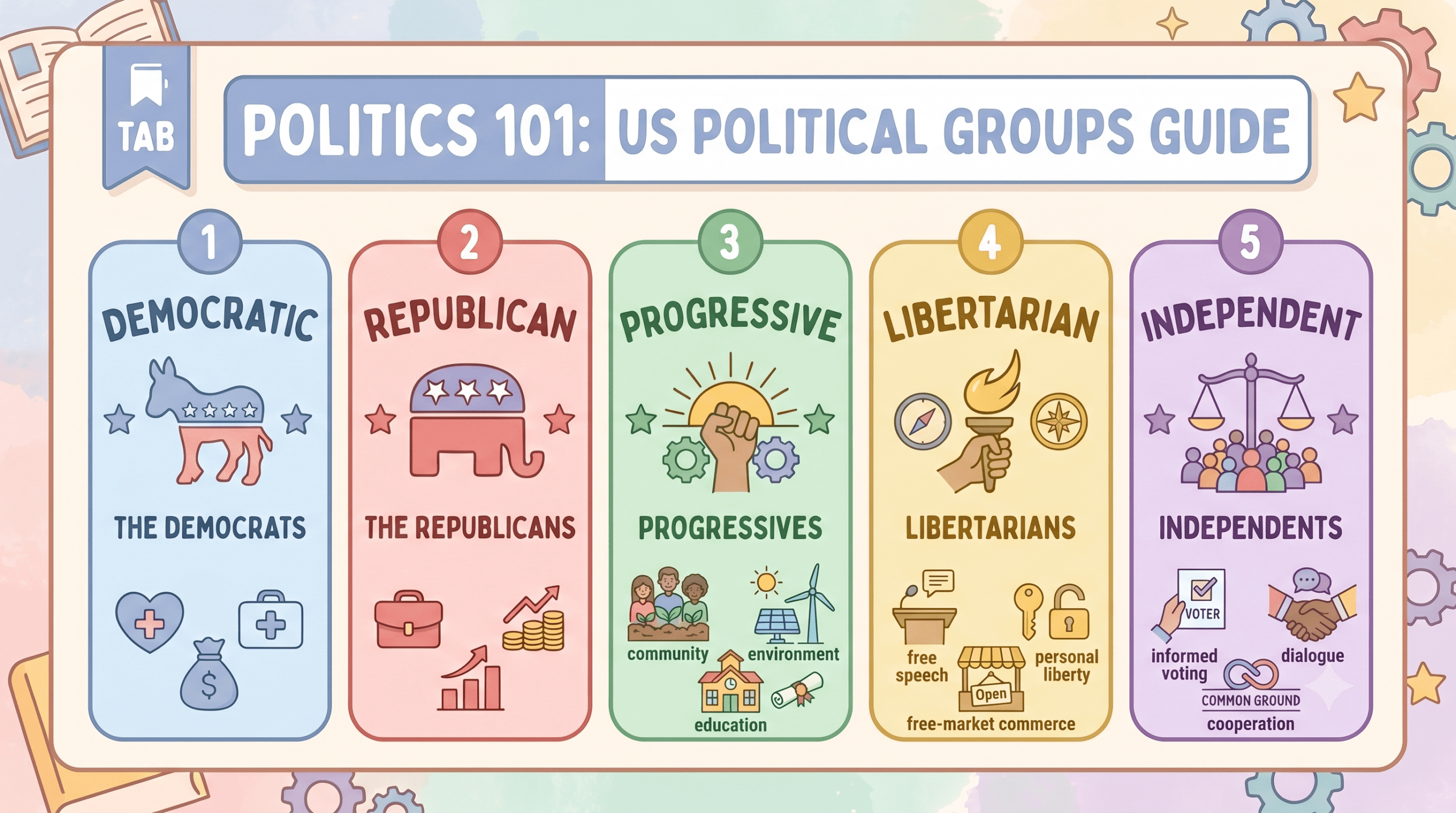
Terms like conservative, progressive, liberals, libertarian and independents are used constantly in American politics, but their exact meanings can change depending on the context. While these labels are broad and do not describe every individual perfectly, understanding them is essential for navigating modern political debates.
In a system built on shared shared between between state and national governments, these differing political philosophies deeply influence how laws are made and enforced across the country.
The Major Political Perspectives
When analyzing American government, evaluating the core differences of conservative vs liberal vs progressive philosophies is essential to understanding today’s public debates. In a system built on shared power between state and national governments, these ideologies influence how official platforms form across branches of government nationwide.
Comparing Conservative vs Liberal vs Progressive Frameworks
In general, conservatives tend to value tradition, stability, limited government, and gradual change. Because conservatives strongly favor local control, they often push to shift power away from Washington, D.C. To understand how this contrasts with other structures, read our breakdown on Federal vs. Unitary Systems.
- Emphasis on individual responsibility
- Support for free markets
- Strong national defense
- Focus on local control
In U.S. politics, liberals are generally more supportive of an active government role in addressing social and economic issues. This ideological divide frequently plays out in real-world policy areas; for instance, a classic example of this push-and-pull is explored in our article on Who Controls Education in the US.
- Civil rights protections
- Environmental rules to address key issues
- Robust social programs
- Policies aimed at reducing inequality
Progressives are usually on the liberal side of the political spectrum, but often support faster or broader reforms.
- Stronger action on healthcare access
- Ambitious climate policy initiatives
- Expanded labor protections
- Direct focus on economic inequality
Libertarians focus on maximizing individual liberty and sharply minimizing government intervention across both social and economic life.
- Strict defense of personal and individual freedoms
- Highly minimal taxation and reduced government spending
- Opposition to federal regulation of markets and private choices
Independents do not align fully or permanently with any single political party, choosing candidates based on specific issues.
- Flexible, case-by-case evaluation of policies
- Pragmatic mix of differing viewpoints
- Rejection of strict party-line loyalty and political polarization
Quick Comparison
The table below highlights how each group generally approaches public policy and government involvement:
| Political Group | Core Philosophical Focus | View on Government’s Role |
|---|---|---|
| Conservatives | Tradition, stability, and gradual change | Limited intervention; focus on state/local power |
| Liberals | Social equality and regulated economic support | Active role in correcting social and economic issues |
| Progressives | Expansive reform and structural change | Robust, systemic intervention to drive rapid progress |
| Libertarians | Maximizing individual liberty across all areas | Highly minimal power; sharp reduction in spending and rules |
| Independents | Pragmatic and flexible approach to policy | Case-by-case evaluation rejecting strict party lines |
Important Note: These descriptions represent general patterns rather than fixed, rigid categories. In reality, many citizens hold a unique mix of views and may not identify strongly with any single label.
Why It Matters
These terms form the foundation of news coverage, political campaigns, and legislative debates. By understanding the core principles behind the labels, you can follow public policy discussions more easily, see past the political rhetoric, and better analyze how federalism plays out when these ideologies clash over state versus federal power.



No discussions yet
Be the first to join the discussion and share your thoughts with the community.