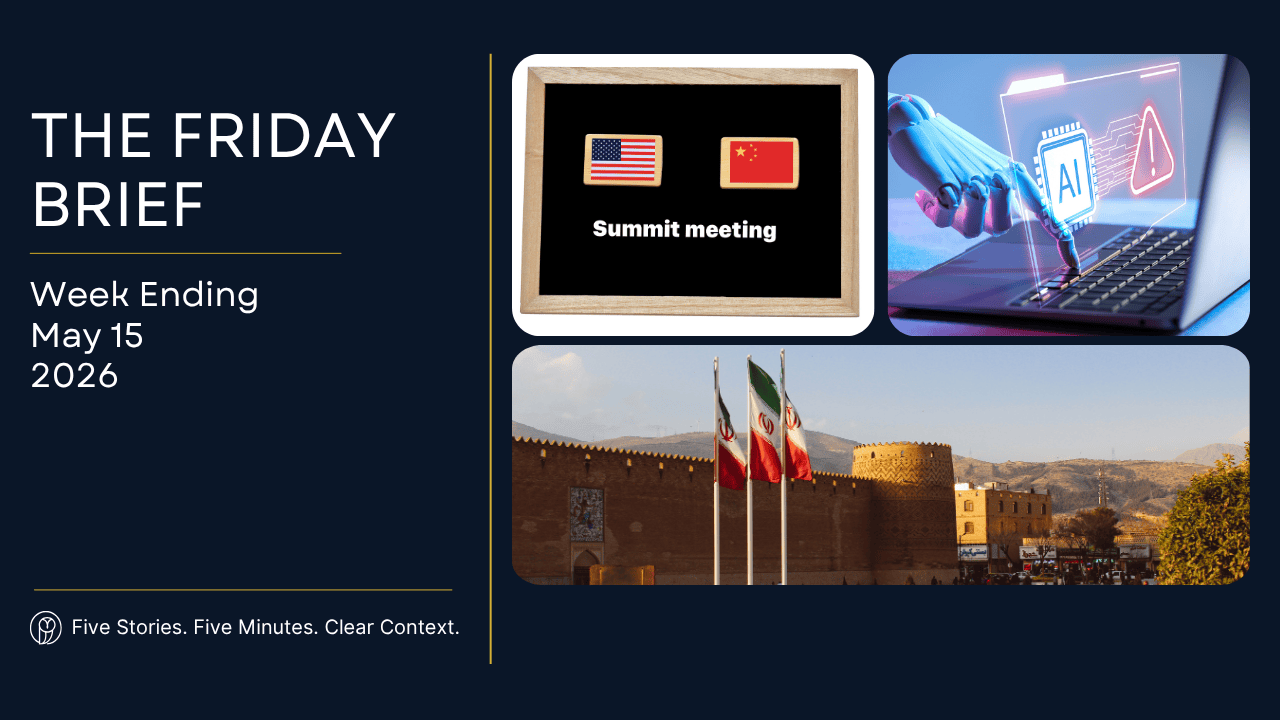
The fragile ceasefire discussions remain unstable, and global markets are reacting to nearly every development. At the center is the Strait of Hormuz — a strategically critical oil shipping route. Even limited disruption here quickly ripples through the global economy.
- Iran responded to U.S. proposals through Pakistani mediators.
- Drone and missile activity targeted Gulf regions.
- Secretary of State Marco Rubio urged European allies for a stronger stance.
- Brief market rally on hopes of de-escalation followed by return of volatility.
The summit between Donald Trump and Xi Jinping is one of the most consequential geopolitical meetings of the year. Discussions include tariffs, AI competition, rare earth mineral supply chains, and Taiwan tensions.
The relationship now influences nearly every major system: manufacturing costs, inflation trends, and technology development.
The International Monetary Fund warned that AI-powered cyberattacks are becoming a systemic threat to global financial systems. AI makes crime faster, more scalable, and harder to detect.
The Deeper Shift: Trust at Risk
As AI-generated content becomes more realistic, the line between real and synthetic information continues to blur. The issue is no longer just cybersecurity — it is informational trust.
Renewed discussions and prisoner exchanges have reopened conversations about de-escalation. Even as attention shifts, the conflict influences NATO defense spending, foreign aid debates, and energy markets.
The Iran-related conflict triggered a sharp increase in AI-generated war footage circulating across social platforms. This defines the modern challenge: What is real? Who verifies truth? How fast can false content spread before correction?
- Vatican diplomatic efforts linked to Iran peace negotiations
- Ongoing economic pressure from global tariffs and supply chain instability
- Oil market volatility tied to Middle East shipping routes
- Expanding international discussions around AI regulation and governance
No discussions yet
Be the first to join the discussion and share your thoughts with the community.