
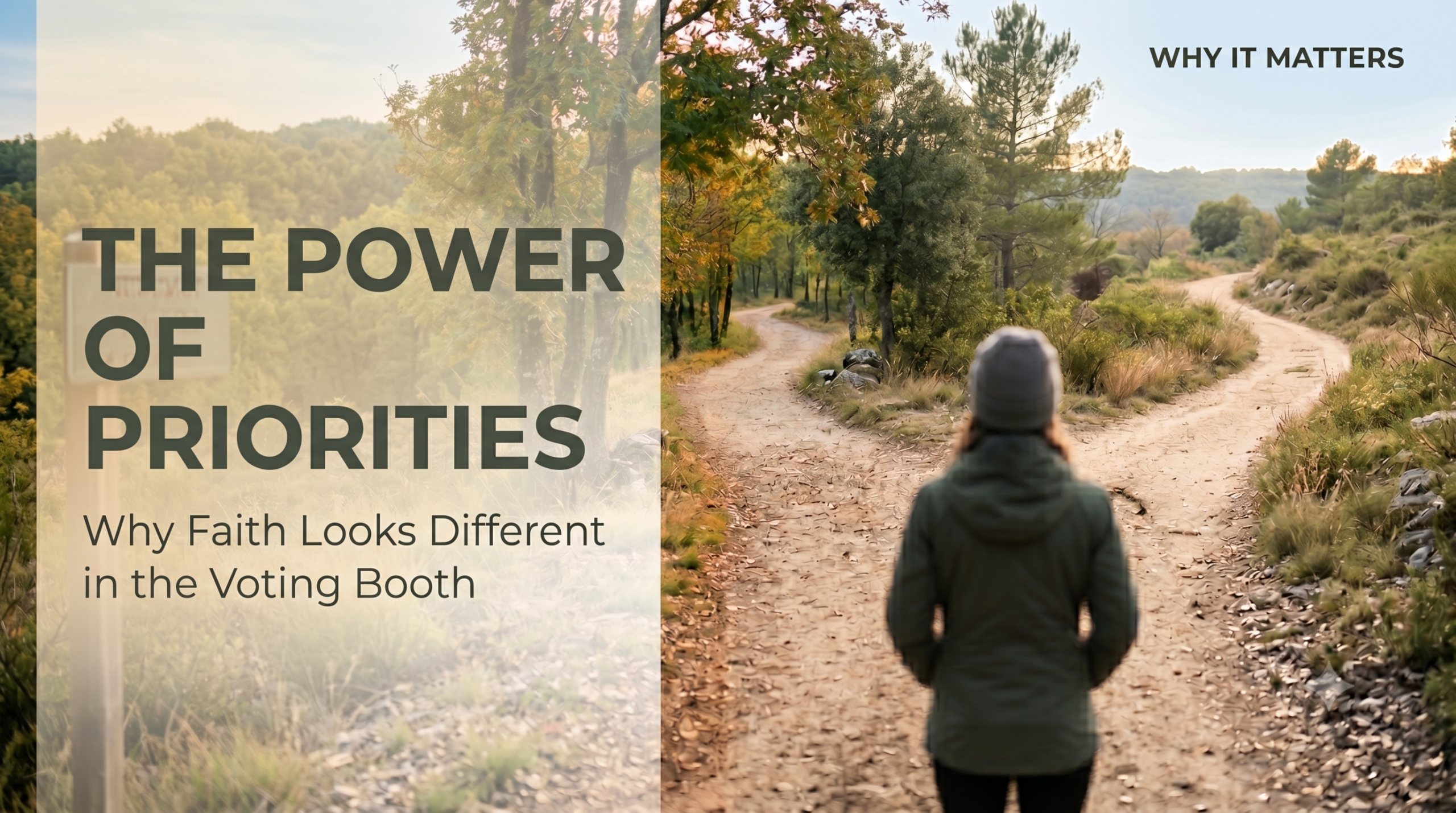
Why Religion and Politics Matter: The Power of Priorities
EEver find yourself scratching your head during election season, wondering how two people who sit in the exact same pew can walk into a voting booth and pull completely different levers? It’s easy to assume that a shared religion and political beliefs should always go hand-in-hand. In reality, that is rarely how it works.
It’s easy to assume that people of the same faith should share the exact same political beliefs. In reality, that is rarely how it works. Across the country, millions of Americans share identical religious traditions but hold starkly different views on the nation’s most debated issues.
While faith deeply influences political values, it doesn’t automatically dictate a person’s final vote. Understanding why this happens doesn’t just clear up political confusion—it helps us understand each other.
🧭 The Value Priority Map: Religion and Political Beliefs
Instead of treating political disagreements as “right vs. wrong,” think of them as a radio mixing board. Everyone has the same buttons (core values), but everyone slides the volume up or down differently.
Here is how two well-meaning people with the exact same religious foundation can arrive at two entirely different political destinations based on what they choose to prioritize:
| Core Value | 🗳️ Voter A Focuses On… | 🗳️ Voter B Focuses On… |
|---|---|---|
| Sanctity of Life / Family | The Unborn: Protecting life at its earliest stages; defining moral lines on abortion. | Family Support: Strengthening post-birth resources, healthcare, and education for families. |
| Justice / Compassion | Rule of Law: Ensuring safe, orderly communities and protecting personal/religious freedoms. | Systemic Support: Fighting poverty, hunger, and ensuring equal housing opportunity. |
| The Role of Government | Limited Scope: Believing local communities and churches—not the state—should handle charity. | Active Intervention: Believing the government should actively fund and manage social safety nets. |
🔄 Flip the Script: A 2-Second Mental Shift
When we assume that political opponents are simply uninformed or uncaring, any chance of a productive conversation completely stalls. To break through the noise, try trading an old assumption for a new question:
❌ OLD WAY OF THINKING
“How could a reasonable person vote for that? They must not care.”
✅ THE ‘WHY IT MATTERS’ WAY
“What specific value are they prioritizing right now over others?”
🔄 Flip the Script: A 2-Second Mental Shift
When we assume that political opponents are simply uninformed or uncaring, any chance of a productive conversation completely stalls. To break through the noise, try trading an old assumption for a new question:
❌ Old Way of Thinking
“How could a reasonable person vote for that? They must not care.”
✅ The ‘Why It Matters’ Way
“What specific value are they prioritizing right now over others?”
📚 Deepen Your Understanding
To explore how these principles apply to the structure of government, read our foundational guide, Faith and State.
For further discussion and data on this topic, explore these comprehensive resources:
- Read the Pew Research Center series on religion’s role in public life.
- Review academic perspectives via the National Library of Medicine’s analysis of faith and governance.

No discussions yet
Be the first to join the discussion and share your thoughts with the community.