
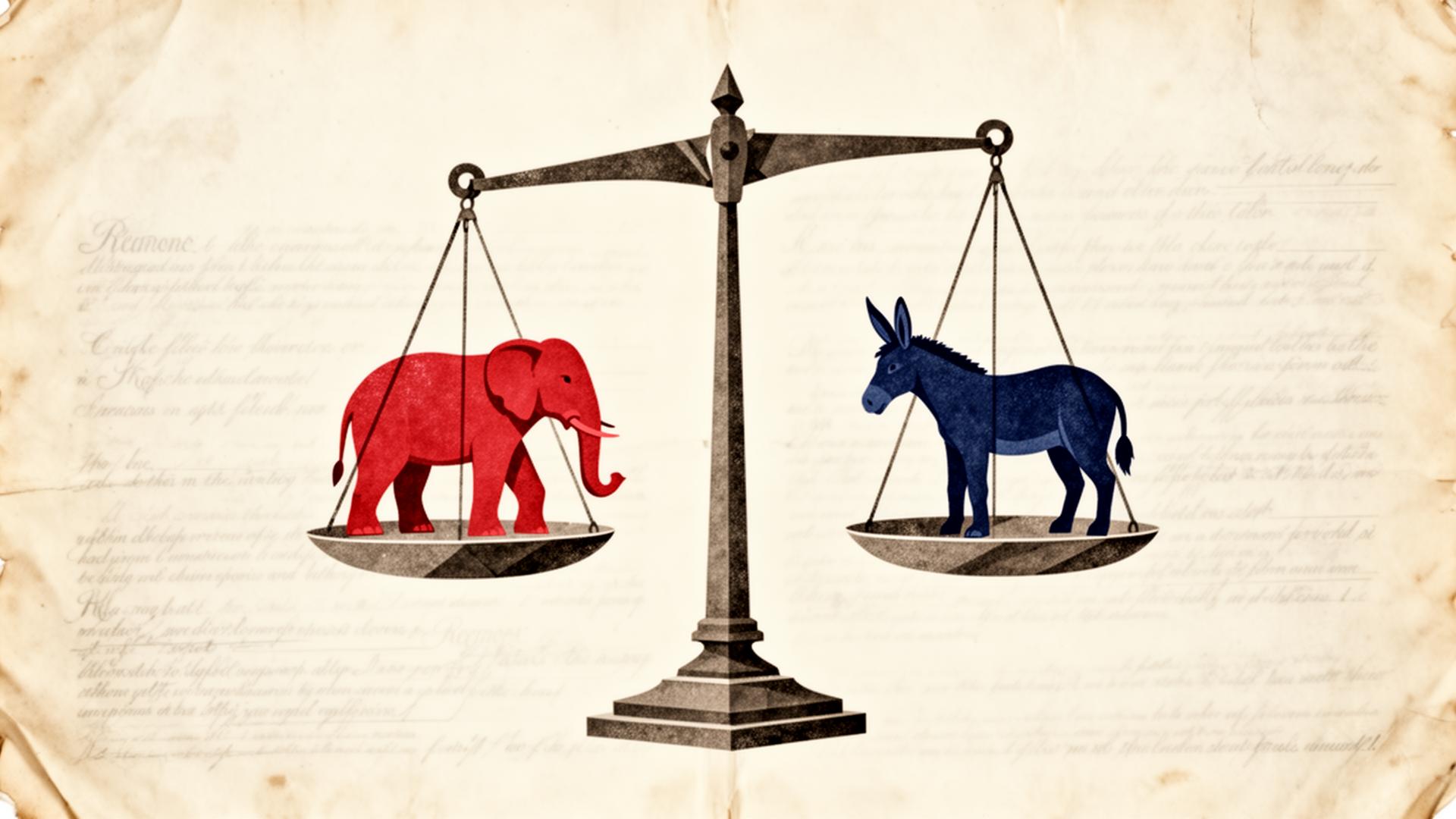
When analyzing governance, party labels like “Democrat” or “Republican” often dominate the conversation. However, focusing solely on party affiliation ignores the broader, foundational political philosophies driving American voters.
According to historical longitudinal tracking data from Gallup Political Identification Polls, a record-breaking 45% of American adults actively identify as political independents. This massive group completely eclipses the individual shares of registered Republicans and Democrats, which have both dropped to a stable 27%. To truly understand policy debates, we must step past party banners and examine core ideological spectrums.
1. The Four Foundational Political Ideologies
Rather than a simple binary choice, the American electorate navigates a multi-dimensional ideological map. Most policy positions trace directly back to four prominent worldviews:
Conservatism
Conservatives generally prioritize traditional civic values, individual liberty, and free-market capitalism. They advocate for a smaller government footprints, lower federal taxation, and a strong national defense system.
Liberalism
Liberals believe collective government action is required to correct systemic social disparities. They advocate for expanded public safety nets, environmental protections, robust infrastructure investments, and progressive tax brackets.
Libertarianism
Libertarians champion absolute individual sovereignty in both economic and personal spheres. They strongly oppose government intervention, favor sweeping deregulation, advocate for minimal taxes, and defend strict civil liberties.
Independent Pragmatism
Independent voters frequently reject uniform party platforms entirely. Instead, they evaluate individual issues sequentially, often blending fiscal conservatism (lower debt) with social liberalism (personal freedoms).
2. Macro Policy Approaches: State-Level Trends
These competing frameworks create measurable, divergent outcomes when implemented at the state legislative level. State governments controlled by different ideological majorities display contrasting spending patterns.
| Policy Sector | Liberal / Progressive Tendencies | Conservative / Libertarian Tendencies |
|---|---|---|
| Healthcare Models | Higher baseline insurance coverage; broad Medicaid safety net eligibility expansions. | Lower average health coverage rates; reliance on private market competition. |
| Education Systems | Elevated per-student public investments; competitive statewide teacher pay scales. | More decentralized funding; strong statutory support for school choice programs. |
| Fiscal Frameworks | Higher localized average wages; robust public services funded via higher progressive tax rates. | Lower individual tax burdens; streamlined regulatory codes; lower cost of basic real estate. |
3. The Unavoidable Fiscal Trade-Offs
Political campaigns are built on sweeping slogans. However, sustainable governance requires understanding that every singular policy choice carries an absolute fiscal compromise:
The Core Governing Compromises
- Minimizing individual tax rates increases personal take-home pay but limits shared infrastructure and community investments.
- Expanding social safety nets provides security for lower-income families but requires a wider, higher tax base.
- Enforcing corporate regulations maximizes consumer environmental safety but increases final retail production costs.
The Strategic Takeaway
The fundamental debate in American life is not whether our governing institutions should exist. The conflict centers on defining the ideal scope of government power. True political literacy means recognizing that both decentralized market frameworks and centralized public safety nets are legitimate structural strategies designed to solve complex societal problems. They simply follow completely opposite maps.


No discussions yet
Be the first to join the discussion and share your thoughts with the community.