
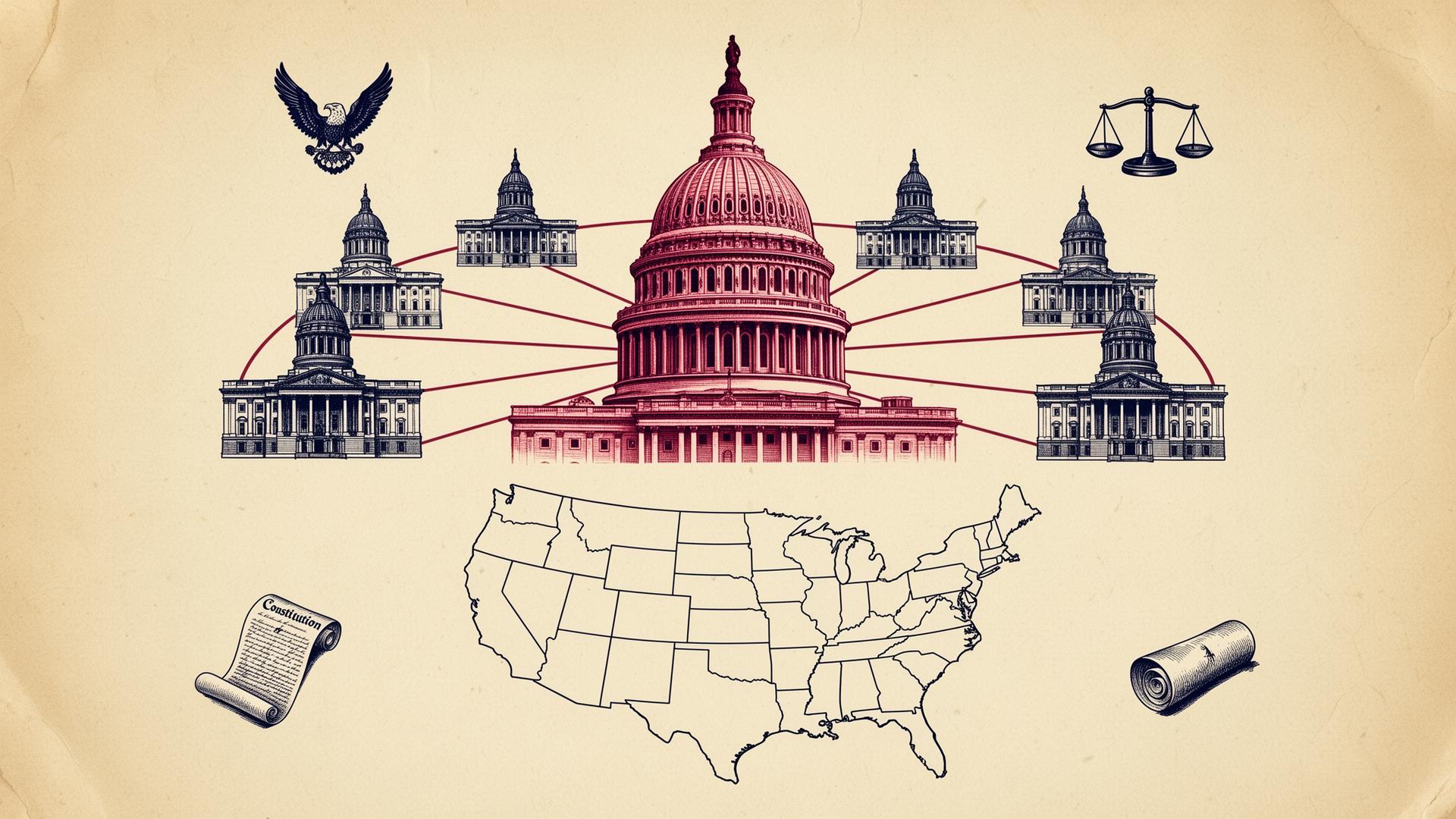
A Clear Example of Federalism: The United States
In the United States, federalism dictates how power is shared between the federal government in Washington, D.C., and the 50 individual state governments.
The diagram above shows how federalism works in practice. Some powers belong exclusively to the national government, others belong to state governments, and a third category includes powers shared by both levels of government.

National Government Powers
The federal government is responsible for issues that affect the entire nation, including:
- Maintaining the military
- Declaring war
- Creating foreign policy
- Regulating interstate and international commerce
- Coining money
- Operating the postal system
These powers help ensure consistency across the country and allow the United States to function as a unified nation.
State Government Powers
State governments focus on issues that directly affect their residents, including:
- Public education
- Conducting elections
- Professional licensing
- Public safety
- Marriage and family laws
- Establishing local governments
Because states face different challenges and priorities, they often create policies tailored to their specific populations.
Shared (Concurrent) Powers
Some responsibilities are shared by both federal and state governments. These are known as concurrent powers and include:
- Collecting taxes
- Borrowing money
- Making and enforcing laws
- Establishing courts
- Providing services for the public good
This shared authority is one of the defining characteristics of federalism and helps balance power throughout the country.
Federalism is widely supported in the United States, but people often disagree about where the balance of power should be. Some believe state governments should have more control because local leaders better understand the needs of their communities. Others argue that the federal government should play a stronger role to ensure equal rights and protections across all states. Many modern political debates—including education, healthcare, environmental regulations, gun laws, and voting rules—are ultimately debates about federalism and where authority should reside.
Why People Disagree About Federalism
Federalism is widely accepted in the United States, but people often disagree about where the balance of power should be.
Some believe state governments should have more control because local leaders are often more familiar with the needs, values, and priorities of their communities. They argue that states can create policies that better reflect the people who live there.
Others believe the federal government should play a stronger role to ensure that all Americans receive the same rights, protections, and opportunities regardless of which state they live in.
Many modern political debates—including education, healthcare, environmental regulations, voting laws, and gun policies—are ultimately debates about federalism and where governmental authority should reside.
The disagreement is usually not about whether federalism should exist, but rather about how power should be divided between the federal government and the states.
Why Federalism Matters in Everyday Life
Federalism affects your daily life more than you may realize.
Because states have the authority to create and enforce many of their own laws, your experience can vary depending on where you live. Examples include:
- Different state income tax rates
- Different education standards and graduation requirements
- Varying driver’s license rules and regulations
- Different healthcare programs and eligibility requirements
- Different laws regarding marijuana, gambling, and other social issues
Understanding federalism helps explain why laws and policies can change dramatically from one state to another while all states remain part of the same country.
When politicians debate issues such as states’ rights, federal mandates, or national standards, they are often debating the boundaries of federalism and how power should be shared within the United States.


Hey, this is a demo comment.