
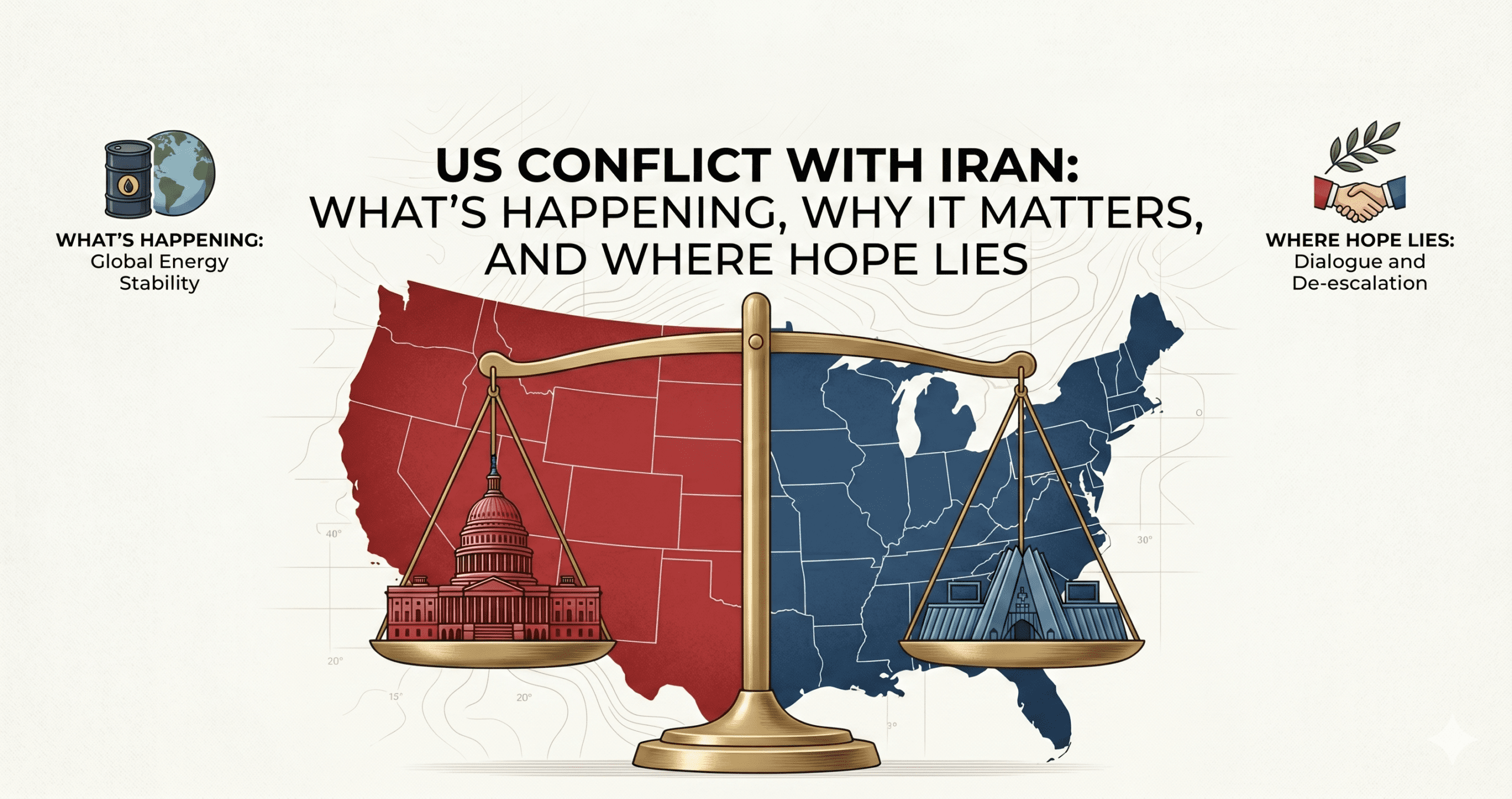
U.S. Conflict With Iran: What’s Happening, Why It Matters, and Where Hope Lies
Editor’s Note (Updated June 2026):
This article was originally published during a period of heightened tensions between the United States and Iran. While some of the specific events described reflect that moment in time, the broader questions surrounding war powers, diplomacy, energy prices, and the impact of global conflicts on everyday Americans remain highly relevant.
What Happened: The Reality on the Ground
In late February 2026, the killing of Iranian Supreme Leader Ali Khamenei triggered a rapid escalation. By early April, the U.S. imposed a naval blockade on Iranian ports and the Strait of Hormuz—a waterway carrying 20% of the world’s oil. The U.S. warned that any vessel breaching the blockade would face immediate consequences.
Iran responded by seizing ships and launching drone attacks across the region. The conflict drew in Hezbollah in Lebanon and drew sharp lines among allies: while the U.S. and Israel pressed forward, NATO partners like Britain and France refused to join the blockade, citing the need to keep global trade open.
As of mid-April, a fragile ceasefire is in place, but the White House says there is “no firm deadline” for ending the war. Meanwhile, Congress has voted four times this year to try to limit the President’s war powers—and failed every time.
Why People Disagree: Two Sides of a Complex Coin
The Case for Strong Action:
- Security: Proponents argue that Iran’s nuclear ambitions and history of supporting terrorism pose an existential threat to the U.S. and Israel.
- Deterrence: They believe that after years of failed diplomacy, only tangible pressure can force a change in behavior.
- Alliance Duty: Supporting Israel and regional partners is seen as a non-negotiable obligation.
The Case for Restraint & Diplomacy:
- The Cost of War: Critics warn that open-ended conflicts in the Middle East have cost trillions and thousands of lives with no clear victory.
- Missed Opportunities: Reports suggest a deal was close before the blockade was imposed. Many argue the administration chose escalation over a potential breakthrough.
- Constitutional Crisis: The war began without a congressional vote, raising alarms about who actually decides when America goes to war.
- Human Cost: Beyond the headlines, there are civilian casualties in Iran and a destabilized region that creates refugees and economic pain for everyone.
The Uncomfortable Middle: Many experts argue that neither pure military force nor pure diplomacy has worked in isolation. The collapse of the 2015 nuclear deal (JCPOA) and the cycle of sanctions have left the U.S. with difficult choices. The truth is likely that both sides have hardliners who benefit from tension: U.S. defense contractors and political hawks on one side, and Iranian hardliners who use external enemies to consolidate power on the other.
Why It Matters to You (Beyond the Headlines)
- Your Wallet: Gas prices have spiked due to oil disruptions. Inflation is rising as supply chains get tangled.
- Your Future: The war is adding billions to the national debt. This borrowing accelerates the timeline for when the Social Security trust fund might run dry, potentially forcing benefit cuts for seniors sooner than expected.
- Your Safety: U.S. troops are in harm’s way, and the risk of ground troops has been raised.
- Your Democracy: The failure of Congress to assert its war powers sets a precedent that could allow future presidents to start wars without your representatives ever voting on them.
What’s Working (And Where We Can Build)
It’s easy to feel hopeless, but there are signs of resilience and progress:
- Diplomacy is alive: Despite the fighting, diplomats from multiple nations are actively negotiating. The April ceasefire proves that dialogue is still possible.
- Accountability is happening: Congress has voted four times to challenge the President’s authority. Even though they lost, the pressure is mounting.
- Allies are speaking up: Britain and France refusing to join the blockade sends a powerful message that escalation is not the only path.
- Grassroots movements: Veterans, peace organizations, and community leaders are organizing to demand transparency and de-escalation. History shows that public pressure does shift policy.
People Are Asking: The Big Questions
Is this legal? The Constitution says Congress declares war. But for 70+ years, presidents have started wars without a formal vote. The War Powers Resolution of 1973 was supposed to fix this, but it’s been ignored. The real issue isn’t just this war—it’s a systemic failure where Congress has let the executive branch take over the decision to go to war.
Will this affect Social Security? Not directly, but indirectly, yes. The war increases borrowing, which makes it harder to fix Social Security’s funding gap. If the trust fund runs out (potentially sooner due to war spending), benefits could drop to 75-80% of what’s promised unless Congress acts.
Who actually wants this? It’s not a conspiracy. It’s a mix of genuine security fears, alliance obligations, economic interests (defense industry), and internal politics on both sides (hardliners in Washington and Tehran).
What You Can Do (Without Feeling Overwhelmed)
You don’t have to solve the war alone. Here is how you can make a difference:
- Stay Informed, Not Consumed: Pick 1-2 trusted sources. Avoid doom-scrolling.
- Contact Your Representative: War powers votes happen because constituents push for them. A call or letter matters.
- Support Local Peacebuilding: Volunteer or donate to organizations working on conflict resolution or refugee support.
- Challenge the Narrative: When friends share inflammatory headlines, ask: “What’s the source?” “What’s the other side saying?”
- Vote with Context: Foreign policy affects your wallet and your safety. Make it a priority in your next vote.
Final Thought: Why This Isn’t Hopeless
History isn’t written by inevitability. It’s written by choices. The situation is serious, but it is not hopeless. Conflicts have ended before. Policies have changed. People have won.
The hardest truth is that reasonable people can look at the same facts and reach different conclusions. The goal isn’t to win the argument. It’s to understand it well enough to hold our leaders accountable. And that starts with you, reading this, and refusing to accept that war is the only option.


No discussions yet
Be the first to join the discussion and share your thoughts with the community.