
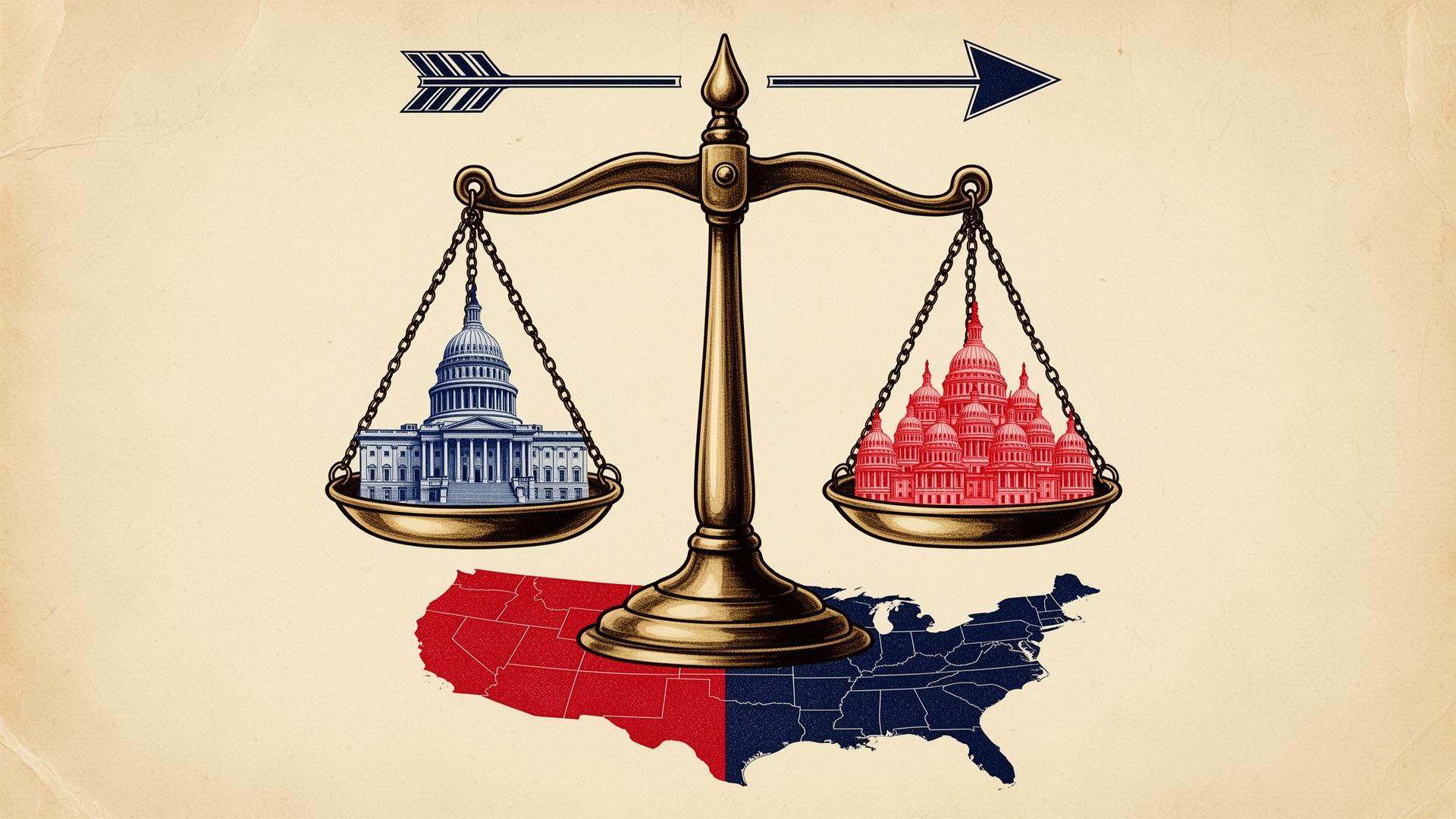
Federal vs. State Power: Why Republicans and Democrats Often Disagree
One of the most important ideas in American politics is federalism—the sharing of power between the federal government and state governments.
Many political debates are really arguments about one simple question:
Who should make the rules—the federal government or the states?
Both Republicans and Democrats support the American system of federalism. However, they often disagree about where the balance of power should be. In general, Republicans tend to favor more authority for state governments, while Democrats tend to support a larger role for the federal government.
Understanding this difference can make it much easier to follow debates about healthcare, education, taxes, environmental regulations, gun laws, and many other issues.
What Is Federalism?
Federalism is a system of government in which power is divided between a national government and state governments.
The federal government handles issues that affect the entire country, such as national defense, foreign policy, immigration, and interstate commerce.
State governments handle many local matters, including public schools, driver’s licenses, local law enforcement, and state taxes.
Because power is shared, disagreements often arise over which level of government should have the final authority on a particular issue.
The General Republican View
Republicans generally believe that decisions should be made as close to the people as possible.
For that reason, they often support giving states more freedom to create policies that reflect the needs and values of their residents.
Supporters of this approach argue that:
- Local leaders better understand local communities.
- States can test different ideas and learn from one another.
- Smaller government can reduce bureaucracy and increase accountability.
This does not mean Republicans oppose the federal government. Rather, they typically believe the federal government should focus on responsibilities specifically assigned to it by the Constitution.
The General Democratic View
Democrats generally believe that some challenges are too large to be handled effectively by individual states.
For that reason, they often support a stronger federal role in areas such as civil rights, healthcare, environmental protection, and workplace regulations.
Supporters of this approach argue that:
- Americans should have similar rights and protections regardless of where they live.
- National problems often require national solutions.
- Federal standards can help reduce inequalities between states.
This does not mean Democrats oppose state governments. Rather, they often believe the federal government should play a larger role when consistency and equal protection are important.
Quick Comparison
| Topic | Republicans (Generally) | Democrats (Generally) |
|---|---|---|
| Role of Federal Government | More limited | More active |
| Role of State Governments | Greater authority | Shared authority with federal oversight |
| Preferred Approach | Local flexibility | National consistency |
| Main Argument | Decisions closer to home | Equal protections across states |
Important: These are broad tendencies, not strict rules. Individual politicians and voters often hold views that differ from their party’s general position.
Historical Deep Dive: How the Balance of Federal and State Power Changed Over Time
One of the most common questions in American politics is whether Republicans and Democrats have “switched sides” over the years.
The answer is complicated. The names of the parties stayed the same, but many of their positions, voter coalitions, and views on government changed over time.
Several major events—including economic crises, social movements, and demographic changes—helped shape the modern parties we recognize today.
The Early Years: Different Visions for America
The Democratic Party was founded in 1828 and generally supported a smaller federal government and greater authority for the states. Many Democrats of the time believed local communities should have significant control over their own affairs.
The Republican Party was founded in 1854. Early Republicans supported a stronger federal government, particularly when it came to building infrastructure, promoting economic growth, and preventing the expansion of slavery into new territories.
After the Civil War, Republicans used federal authority during Reconstruction to help enforce new constitutional protections for formerly enslaved people.
The Great Depression and the New Deal
The next major shift came during the Great Depression of the 1930s.
As unemployment soared and businesses failed, President Franklin D. Roosevelt introduced a series of programs known as the New Deal. These programs expanded the role of the federal government in the economy and provided assistance to millions of Americans.
Many Democrats supported these changes, arguing that the crisis required a strong national response.
Many Republicans opposed the expansion, believing that states, businesses, and individuals should retain more responsibility and that excessive federal power could create long-term problems.
This period helped shape the modern debate over how active the federal government should be in economic matters.
The Civil Rights Movement
Another major turning point occurred during the Civil Rights Movement of the 1950s and 1960s.
For many decades, the Democratic Party had strong support throughout the South. However, when Democratic leaders supported the Civil Rights Act of 1964 and the Voting Rights Act of 1965, many conservative Southern Democrats disagreed with the increased federal involvement in civil rights issues.
Over time, many of those voters began supporting Republican candidates.
At the same time, many Black voters increasingly supported Democratic candidates because of the party’s support for civil rights legislation.
These changes did not happen overnight, but over several decades they helped reshape the modern political map of the United States.
What About Independent Voters?
Although most political discussions focus on Republicans and Democrats, many Americans identify as independents.
An independent voter is someone who does not formally identify with either major political party. However, independents are not all alike.
Independent Leaners
Most people who identify as independents still tend to favor one party over the other.
Some regularly vote for Democratic candidates and support many Democratic policies.
Others regularly vote for Republican candidates and support many Republican policies.
These voters often choose the independent label because they value political independence or do not feel fully represented by either party.
True Independents
A smaller group of voters are considered “true independents.”
These voters do not consistently support either party and may evaluate each issue or candidate individually.
For example, a person might support lower taxes while also supporting stronger environmental regulations. Their views may not fit neatly into either party’s platform.
Because of this, their voting behavior is often less predictable.
Why Independents Matter
Independent voters can play an important role in close elections.
Republicans and Democrats each have large groups of loyal supporters. As a result, elections are often decided by voters who are willing to consider candidates from either party.
For that reason, politicians frequently try to appeal to independent voters, especially in competitive states and districts where a small number of votes can make a significant difference.
Why People Disagree About Federalism
Federalism is widely supported in the United States, but people often disagree about where the balance of power should be.
Some believe state governments should have more control because local leaders better understand the needs of their communities.
Others argue that the federal government should play a stronger role to ensure equal rights and protections across all states.
Many modern political debates—including education, healthcare, environmental regulations, gun laws, and voting rules—are ultimately debates about federalism and where authority should reside.
Understanding this disagreement can help explain why people who care about the same issue may still support very different solutions.
Why Federalism Matters in Everyday Life
Federalism affects your daily life more than you may realize.
Examples include:
- Different state income tax rates
- Different education standards
- Different voting rules and election procedures
- Different healthcare programs and insurance regulations
- Different environmental protections
- Different business and labor laws
For example, someone moving from one state to another may discover different tax rates, school requirements, gun laws, or healthcare programs.
Supporters of stronger state power believe this flexibility allows communities to create policies that fit their unique needs.
Supporters of stronger federal power believe Americans should have similar rights and protections regardless of where they live.
Many political debates are not simply about what policies should exist, but who should have the authority to create them.
Frequently Asked Questions
Do Republicans want to eliminate the federal government?
No. Republicans generally support the federal government carrying out its constitutional responsibilities, such as national defense, foreign policy, and interstate commerce. They often prefer giving states greater authority over many domestic issues.
Do Democrats want the federal government to control everything?
No. Democrats generally support state governments as well. However, they often favor a stronger federal role when they believe national standards or protections are necessary.
Can states ignore federal laws?
Generally, no. Under the Constitution’s Supremacy Clause, valid federal laws take precedence over conflicting state laws. However, disagreements about whether a federal law is constitutional can be challenged in court.
Why do states have different laws?
The Constitution reserves certain powers to the states. As a result, states can create their own laws and policies in many areas, provided they do not conflict with federal law.
Has the balance of power always been the same?
No. Throughout American history, the balance between federal and state authority has shifted in response to wars, economic crises, social movements, and Supreme Court decisions.
Check Your Understanding
Question 1
A governor argues that each state should create its own education standards because local communities understand their students best.
Which viewpoint does this most closely reflect?
A) The general Republican view
B) The general Democratic view
Answer: A
Republicans generally support allowing states greater flexibility to create policies that reflect local needs and priorities.
Question 2
A lawmaker argues that environmental regulations should be consistent across all states because pollution can cross state borders.
Which viewpoint does this most closely reflect?
A) The general Republican view
B) The general Democratic view
Answer: B
Democrats generally support national standards when they believe a problem affects the entire country.
Question 3
True or False:
Federalism means all power belongs to the federal government.
Answer: False
Federalism is a system in which power is shared between the federal government and state governments.
Question 4
What is the main disagreement between Republicans and Democrats regarding federalism?
A) Whether government should exist
B) Where the balance of power between federal and state governments should be
Answer: B
Both parties support the American system of government, but they often disagree about how much authority should belong to Washington, D.C., versus the states.
Key Takeaway
Republicans and Democrats both operate within the American system of federalism, where power is shared between the federal government and state governments.
The primary disagreement is not whether federalism should exist, but where the balance of power should be.
Republicans generally favor giving states more authority and flexibility, while Democrats generally support a stronger federal role in addressing national issues and ensuring consistent protections across the country.
Understanding federalism helps explain many of the political debates that shape everyday life in the United States.
Sources and Further Reading
The information in this article is based on historical records, government documents, and nonpartisan research organizations that study American politics and voter behavior.
Recommended Sources
- Pew Research Center – Political Typology and Party Identification
- Library of Congress – Civil Rights Movement Resources
- National Archives – The Civil Rights Act of 1964 and Voting Rights Act of 1965
- Franklin D. Roosevelt Presidential Library – The New Deal
- U.S. Senate Historical Office – Political Parties and Party History
- Encyclopaedia Britannica – Federalism in the United States
Note on Political History
Political parties evolve over time. Historians continue to debate the causes and significance of various political realignments. This article presents a simplified overview designed to help readers understand the major historical shifts that shaped today’s political landscape.


No discussions yet
Be the first to join the discussion and share your thoughts with the community.