
What Is Federalism? Federal vs. Unitary Systems Explained
Understanding how governments divide power between national and local authority.
What is federalism? Federalism is a system of government where power is divided between a national government and regional governments, such as states or provinces.
Understanding what is federalism helps explain why countries organize power differently and why Americans often debate state power, federal authority, and local control.
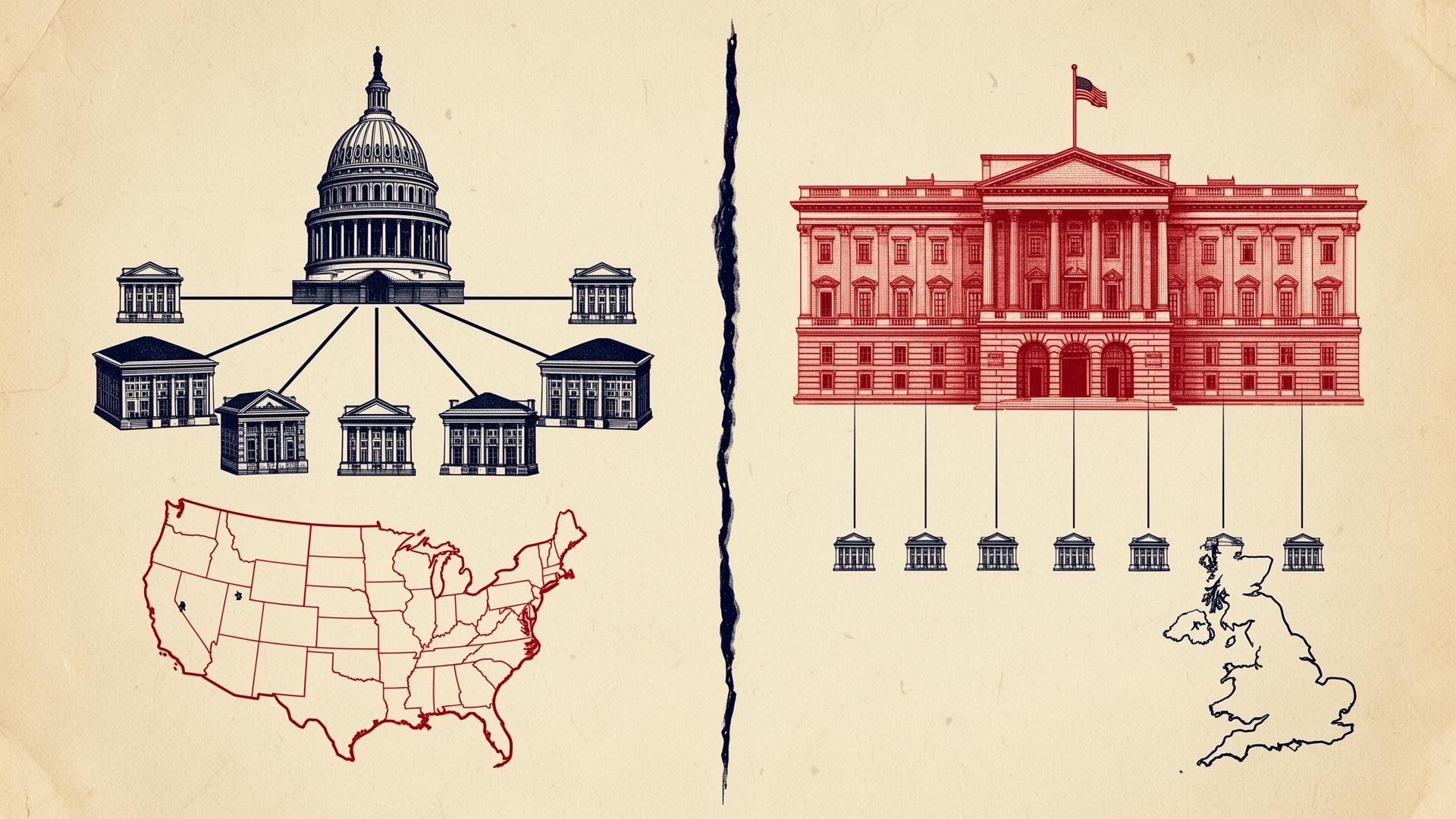
Federal systems share power between national and regional governments. Unitary systems place ultimate authority in one central government.
What Is Federalism and How Does It Work?
In a federal system, power is divided between the national government and regional governments.
In practice, both levels of government have their own responsibilities. Neither level can simply eliminate the other.
The United States is one of the best-known examples of federalism. The federal government manages national defense and foreign policy, while states oversee many areas such as education, elections, and local law enforcement.
This structure comes from the U.S. Constitution, which creates a system where power is shared between Washington, D.C. and the states.
What Is a Unitary System?
In a unitary system, ultimate authority belongs to one national government.
However, local or regional governments may still exist. Their power comes from the central government.
For example, the United Kingdom has local governments in Scotland, Wales, and Northern Ireland, but Parliament in London remains the ultimate legal authority.
You can read more through the UK Parliament explanation of devolution.
Federal vs. Unitary Systems: Quick Comparison
| Feature | Federal System | Unitary System |
|---|---|---|
| Ultimate Power | Shared between national and regional governments. | Held by the national government. |
| Local Authority | Protected by the constitution or national framework. | Granted by the central government. |
| Laws and Policies | May differ by state, province, or region. | Usually more consistent across the country. |
| Examples | United States, Canada, Germany, Australia, India | United Kingdom, France, Japan, South Korea, Italy |
Why Countries Choose Federalism or a Unitary System
In general, countries choose their system based on history, geography, size, and population.
Why Some Countries Choose Federalism
Federalism often works well for large or diverse countries. Different regions may have different cultures, economies, or local needs.
As a result, a federal system allows local governments to respond to those differences while still remaining part of one nation.
Why Some Countries Choose a Unitary System
Unitary systems are often used by smaller or more centralized countries.
In contrast, a national government can create consistent rules and move quickly when making decisions.
If you want to understand how this connects to American government, read our guide on how the three branches of government interact.
Why People Disagree About Federalism
Many political debates are really debates about where power should belong.
The Case for Local Control
On the one hand, some people believe decisions should be made closer to local communities. They argue that state and local governments understand their residents better than a distant national government.
The Case for National Standards
On the other hand, others believe national problems need national solutions. They argue that issues like civil rights, healthcare, elections, and environmental policy should have consistent standards across the country.
Ultimately, this does not mean one side supports democracy and the other does not. It simply means people disagree about where government authority should be concentrated.
Federalism in Everyday Life: Why It Matters
Federalism is not just a civics term. It affects daily life in many ways.
Examples of Federalism in Action
- Education: States help control school standards, curriculum decisions, and graduation requirements.
- Taxes: Federal and state governments both collect taxes and fund different programs.
- Healthcare: Many healthcare programs involve both state and federal rules.
- Transportation: Roads, bridges, and public transit often involve multiple levels of government.
- Elections: States run elections, while federal law sets certain national protections.
When you hear debates about states’ rights, federal mandates, or local control, you are hearing federalism in action.
Academic resources like the Stanford Encyclopedia of Philosophy entry on federalism explain how these systems shape political power across the world.
Frequently Asked Questions About Federalism
Is the United States a federal system?
Yes. The United States divides power between the federal government and the individual states.
Is the United Kingdom federal?
No. The United Kingdom is generally considered a unitary state because Parliament remains the ultimate legal authority.
Which system is better?
There is no single right answer. Federal systems allow more regional control, while unitary systems often create more national consistency.
Why does federalism matter in everyday life?
Federalism affects schools, taxes, healthcare, elections, transportation, and many other parts of everyday life.
Federal and unitary systems answer one basic question: Who should have the power to make decisions?
Federal systems divide authority between national and regional governments. Unitary systems place ultimate authority in one central government.
Understanding this difference helps explain why countries govern differently and why Americans often debate the balance between state and federal power.




No discussions yet
Be the first to join the discussion and share your thoughts with the community.