
Flat Tax vs Wealth Tax: Why Politicians Disagree
Flat Tax vs Wealth Tax is one of the clearest examples of how differently politicians think about taxes. Some states are moving toward lower, flatter tax systems, while others are asking wealthy residents to contribute more.
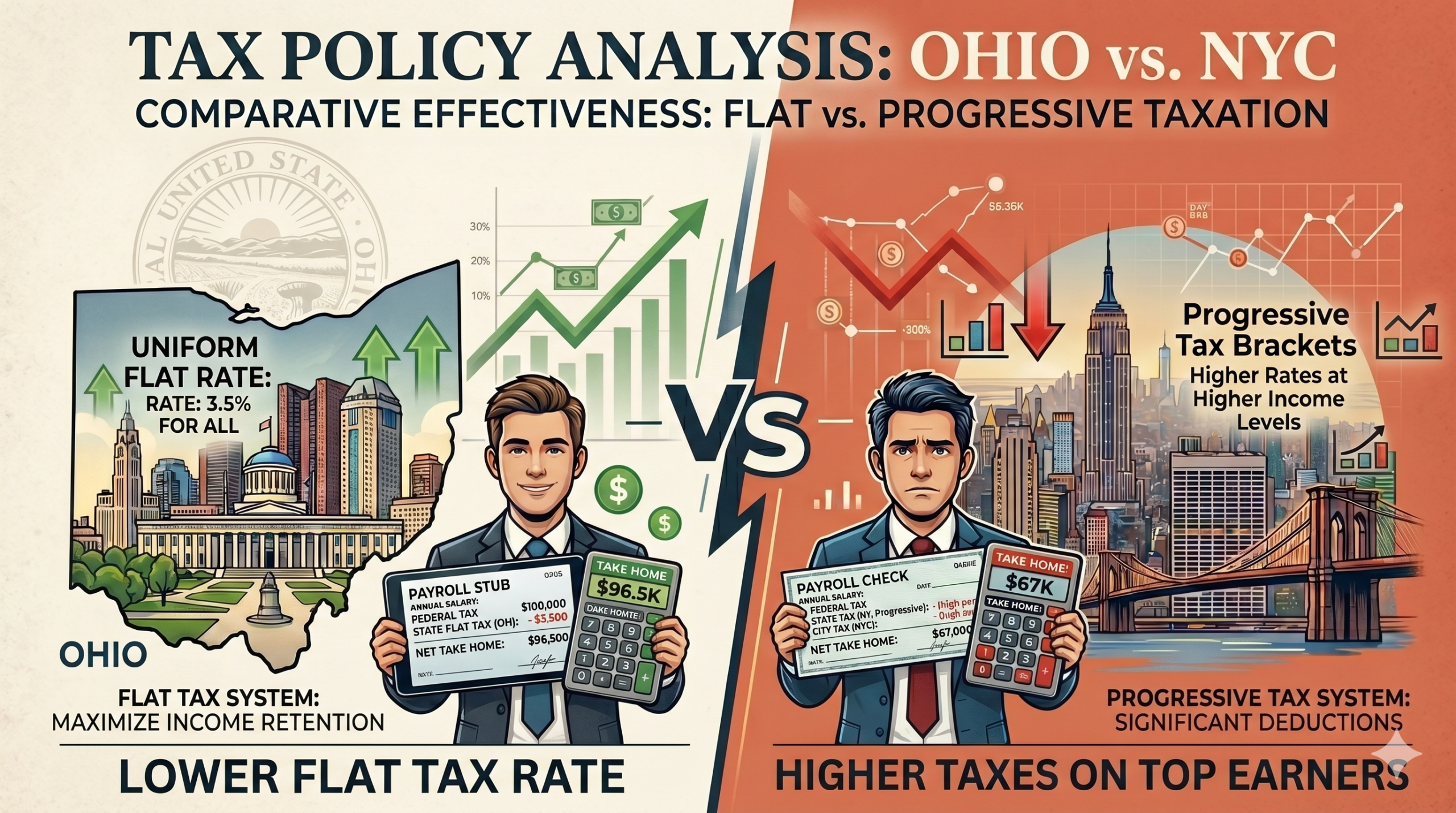
Ohio and New York City show this divide clearly.
Ohio has moved toward a flatter income tax system. New York City, meanwhile, has debated and advanced tax ideas aimed at wealthy property owners and high-income residents.
So why are different places making such different choices?
Flat Tax vs Wealth Tax: Two Different Tax Philosophies
- Why some politicians support flat taxes
- Why others want higher taxes on wealthy residents
- How Ohio and New York City show two different approaches
- Why both sides believe they are solving a real problem
- What voters should ask before choosing a side
Two Very Different Views of Taxation
Most tax debates come down to one basic question:
What should taxes be designed to do?
Some people believe the main goal should be simplicity and economic growth. Others believe the main goal should be fairness and enough revenue to fund public services.
View #1: Taxes Should Be Simple
Supporters of flat or lower taxes often argue that simpler tax systems are easier to understand and better for economic growth.
- Lower rates may encourage investment.
- Simple rules may reduce confusion.
- Businesses may be more likely to expand.
- Workers may keep more of what they earn.
View #2: Taxes Should Reflect Ability to Pay
Supporters of progressive taxes or wealth taxes often argue that people with more income or wealth can afford to contribute more.
- Higher earners can pay a larger share.
- Public services need stable funding.
- Taxes can help reduce inequality.
- The burden should reflect financial capacity.
Flat Tax Example: Ohio’s Approach
Ohio has been moving toward a flatter income tax system. Starting in 2026, Ohio is set to apply a 2.75% flat income tax rate to taxable income above a certain threshold.
Supporters argue that this makes Ohio more competitive with other states, simplifies the tax code, and helps attract workers and businesses.
To supporters, the message is simple:
But critics see a different problem.
They argue that flat taxes often provide the largest benefits to higher earners, while reducing the money available for public services such as schools, roads, healthcare, and local programs.
That is why flat tax debates are rarely just about tax rates. They are also about what a state is willing to fund — and who benefits most from the change.
For more background, you can review Ohio’s official legislative analysis here: Ohio legislative analysis.
Wealth Tax Example: New York City’s Approach
New York City is moving in a different direction.
Instead of lowering income taxes across the board, recent proposals have focused on asking wealthy property owners and high-income residents to contribute more.
One example is the pied-à-terre tax, which targets expensive second homes in New York City rather than primary residences.
Supporters argue that this kind of tax can raise revenue from wealthy non-primary residents while protecting services that working families rely on.
Critics worry that higher taxes could push wealthy residents, investors, or businesses to leave. They argue that if too many high earners move away, the city could lose revenue and economic activity over time.
This is one reason the New York tax debate often becomes emotional. Supporters see it as fairness. Critics see it as a risk to competitiveness.
For additional tax policy background, visit the IRS tax information page or the Tax Foundation.
Why Ohio and New York Are Moving in Opposite Directions
Ohio and New York are not facing the exact same political or economic situation.
Ohio is trying to position itself as a lower-tax, business-friendly state. New York City is trying to fund expensive public services in one of the most costly cities in the country.
That difference matters.
- Ohio is asking: How do we attract people and businesses?
- New York City is asking: How do we fund services in a very expensive city?
Both questions are real. Both create trade-offs.
Why People Disagree So Strongly
Tax policy is not just about math. It is about values.
When someone supports a flat tax, they may be prioritizing simplicity, predictability, and economic growth.
When someone supports a wealth tax or higher taxes on the wealthy, they may be prioritizing fairness, public services, and reducing inequality.
The disagreement often comes down to which problem feels more urgent.
If You Worry About Growth
You may prefer lower and flatter taxes because you believe they make a place more competitive.
If You Worry About Inequality
You may prefer progressive taxes or wealth taxes because you believe people with more resources should contribute more.
People Are Asking About Flat Tax vs Wealth Tax
Is a flat tax better than a wealth tax?
Not automatically. A flat tax is usually simpler, while a wealth tax is usually designed to ask more from people with greater financial resources. Each system involves trade-offs.
Why would a state want a flat tax?
States may adopt flat taxes to simplify filing, lower tax rates, attract businesses, and compete with other states. Supporters believe this can encourage growth and make the state more appealing to workers and investors.
Why would a city want to tax wealthy residents more?
Cities with high public costs may look to wealthy residents, high earners, or luxury property owners for additional revenue. Supporters argue this helps fund services without placing more pressure on lower-income families.
Can higher taxes make wealthy people leave?
Sometimes taxes influence where people live or invest, especially for high-income households and businesses. But relocation decisions also depend on jobs, schools, family, lifestyle, housing, and business opportunities.
Which system is fairer?
That depends on how you define fairness. Some people believe fairness means everyone pays the same percentage. Others believe fairness means people with greater ability to pay should contribute a higher share.
What Voters Should Ask
Before supporting any tax proposal, it helps to ask five questions:
- Who benefits most?
- Who pays more?
- What services could be affected?
- Will this make the state or city more competitive?
- Is the system simple, fair, and financially sustainable?
Those questions matter because tax policy affects more than government budgets. It affects schools, roads, housing, business growth, public safety, and the cost of living.
The Bottom Line
The debate between flat taxes and taxes on the wealthy is really a debate about priorities.
Ohio represents one approach: simplify taxes, lower rates, and try to attract growth.
New York City represents another approach: raise revenue from wealthier residents and luxury property owners to help fund public needs.
Neither approach is perfect.
A flat tax may be simpler, but it can raise questions about fairness and public funding.
Higher taxes on the wealthy may raise revenue, but they can raise concerns about migration, investment, and long-term competitiveness.
The real Politics 101 lesson is this:
Every tax system makes a choice between simplicity, fairness, growth, and revenue. Understanding those trade-offs is often more important than deciding which side is “right.”
What do you think? Should states focus more on lowering taxes to attract growth, or should high-cost cities ask wealthy residents to contribute more?


No discussions yet
Be the first to join the discussion and share your thoughts with the community.