
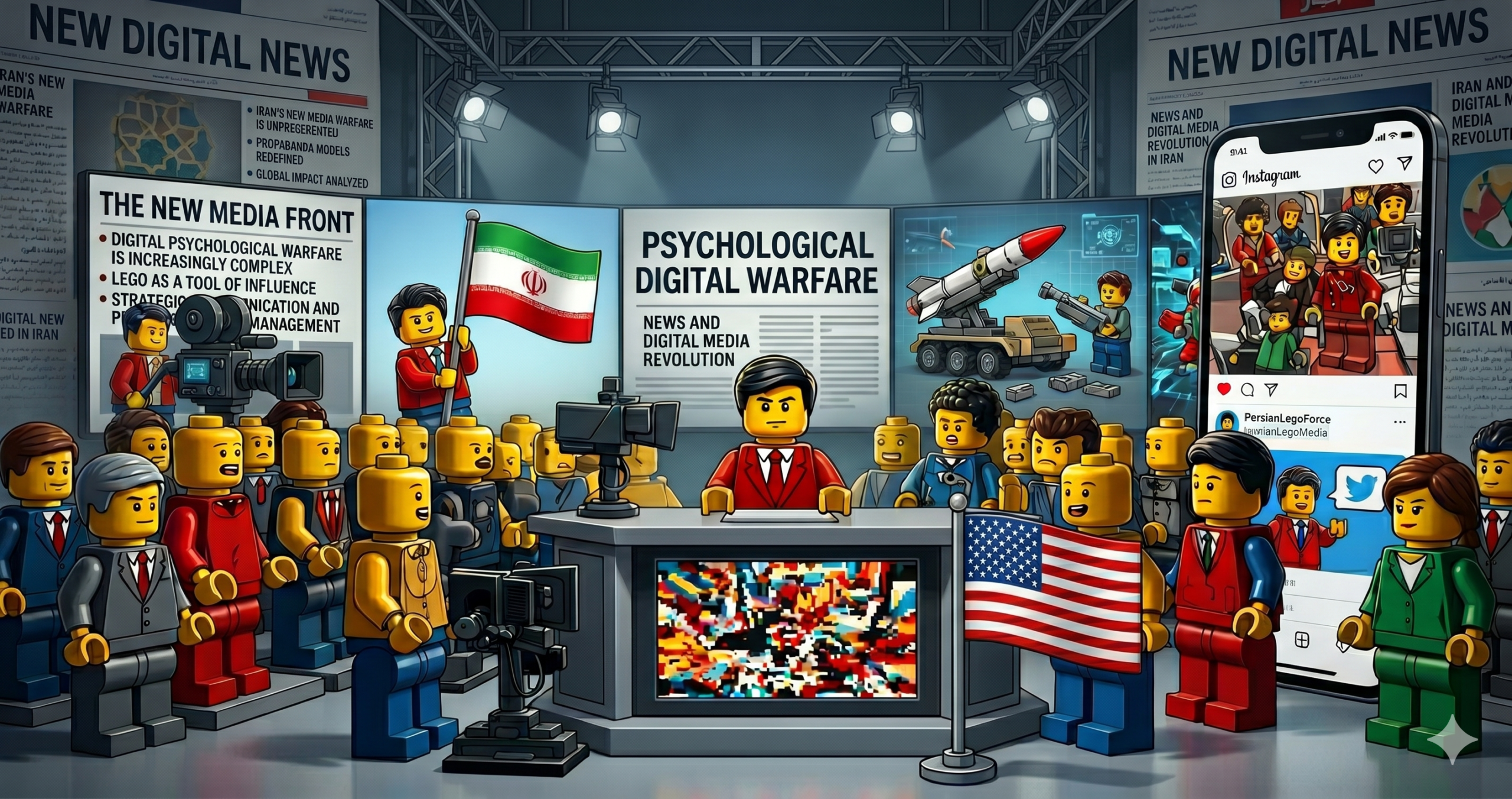
It is surprising how the world has changed in the past ten years. Social media has boomed across the entire world — it feels like almost every other person is on TikTok and Instagram. It seems fun, but there is a darker side too.
Lately these platforms have become a perfect playground for propagandists, especially with the rise of AI-generated videos. You will be scrolling through your feed and come across AI videos representing current global conflicts — simplified storylines, toy-like characters, and bright colors. At first sight it seems totally innocent. But if you look closely:
According to coverage from The Guardian and The Verge, such videos are a calculated way to reshape thinking about current conflicts. These AI-generated “Lego-style” videos are a mask: less formal, more entertaining, and far more shareable. You may call it Lego Propaganda.
1. What Is “Lego Propaganda”?
In short, it’s a strategy where social media activists — specifically those linked to Iranian influence operations — use generative AI to turn real-world conflicts and geopolitical tension into Lego-themed animations.
As per Agent Wars and Moneycontrol reports, these videos are designed to be invisible propaganda. Lego-themed videos are:
Relatable
Simple to follow, familiar aesthetic that doesn’t feel threatening or political at first glance.
Viral-Ready
Travel well across TikTok and YouTube. Short, loopable, and easy to share without context.
Deceptive Format
Blends the line between entertainment and information — tricks the viewer’s brain into lowering its guard.
Important
- These aren’t high-budget productions. Small teams using current AI tools can produce professional-looking content that reaches millions.
- The cartoon format is a deliberate choice — it makes the content feel safe and non-political.
2. Why Does This Propaganda Work?
It works because it isn’t a traditional war-style campaign. No bombs and missiles — just simple, fun videos designed to deliver a message without speeches or official branding.
Familiarity
Lego-style visuals feel safe and nostalgic. Viewers don’t raise their defenses.
Simplicity
Complex geopolitics are reduced to simple storytelling that anyone can follow.
Virality
Short videos can hit millions of views within hours — no ad spend required.
Humor
As per Oregon Public Broadcasting, satire and mockery significantly increase shareability.
The result is content that doesn’t sound like propaganda — even when it is — and gets far more views and shares as a result.
3. The Epstein Effect: When It Feels “True”
One reason these videos perform so well is that they anchor themselves to real, controversial topics — like the Jeffrey Epstein case — before pivoting to geopolitical narratives.
How the mix works:
- Real facts are included (Epstein existed, had powerful connections)
- Unverified claims or speculation are layered in
- Those claims are then connected to completely unrelated geopolitical narratives
The Epstein case is entirely separate from ongoing geopolitical conflicts — there is no valid reason to link the two. But mixing real facts with distortion is exactly what makes the content feel credible.
4. It’s Not About Changing Minds
Since these are cartoon-based videos, they won’t fully convince you of something new. The goal is subtler. These videos work by:
Reinforcement
Strengthening what you already suspect — not planting new beliefs, but deepening existing ones.
Distrust
Increasing distrust in institutions, governments, and mainstream media.
Blurring
Making it harder to distinguish fact from narrative — confusion is the product.
As The Guardian has reported, the goal is often not persuasion — it’s influence through confusion.
5. Who Is the Actual Target?
Gen Z — Primary Target
Reacts fast, prefers short-form video, communicates through memes and visuals, and often trusts social media news regardless of source credibility. Spends multiple hours daily on short-form platforms.
Millennials — Secondary
More skeptical and harder to persuade directly. Still engaged through content that aligns with their existing views.
Gen X & Boomers — Indirect Risk
Less involved in meme culture, but exposed through reposted content, politically filtered interpretations, and social media echo chambers.
6. The Bigger Shift: How Propaganda Has Changed
This isn’t just about Iran. It’s about how propaganda itself works now. As highlighted by The Verge, AI techniques are making influence operations:
Key Changes in Modern Propaganda
- Faster — content can be produced and deployed within hours
- Cheaper — small teams with AI tools can match the output of large operations
- Harder to detect — cartoon aesthetics don’t trigger the same skepticism as traditional state media
- Indistinguishable from entertainment — it doesn’t look like messaging; it looks like content
7. Should You Be Concerned?
Yes — because the effects are real:
- People adopt different geopolitical stances without realizing why
- Trust in information sources erodes over time
- The line between shared reality and actual reality becomes harder to maintain
- Emotional reactions start to outweigh evidence-based thinking
In simpler words: the battlefield isn’t just physical anymore — it has become psychological.
Why This Matters
The next time you see a viral, cartoon-style video explaining a global conflict in 30 seconds, pause and ask yourself: Who made this, what’s their perspective — and how do I feel after watching it? Because today, propaganda doesn’t look like propaganda. It looks like content.
Key Takeaway
AI-generated “Lego-style” videos are a new and effective tool in digital influence operations. They work not by convincing you of something new, but by reinforcing existing suspicions, eroding trust, and blurring the line between fact and narrative — all while looking like harmless entertainment.
Sources & Further Reading
- Agent Wars — “Inside the AI Studio Making Lego Propaganda for Iran”
- Moneycontrol — “How Lego-Style AI Videos Became Iran’s Most Viral War Weapon”
- Oregon Public Broadcasting — “Iran Mocks Trump in War Propaganda”
- The Guardian — Coverage on Iran’s digital influence strategies
- The Verge — Reporting on AI-generated media and propaganda trends

No discussions yet
Be the first to join the discussion and share your thoughts with the community.