
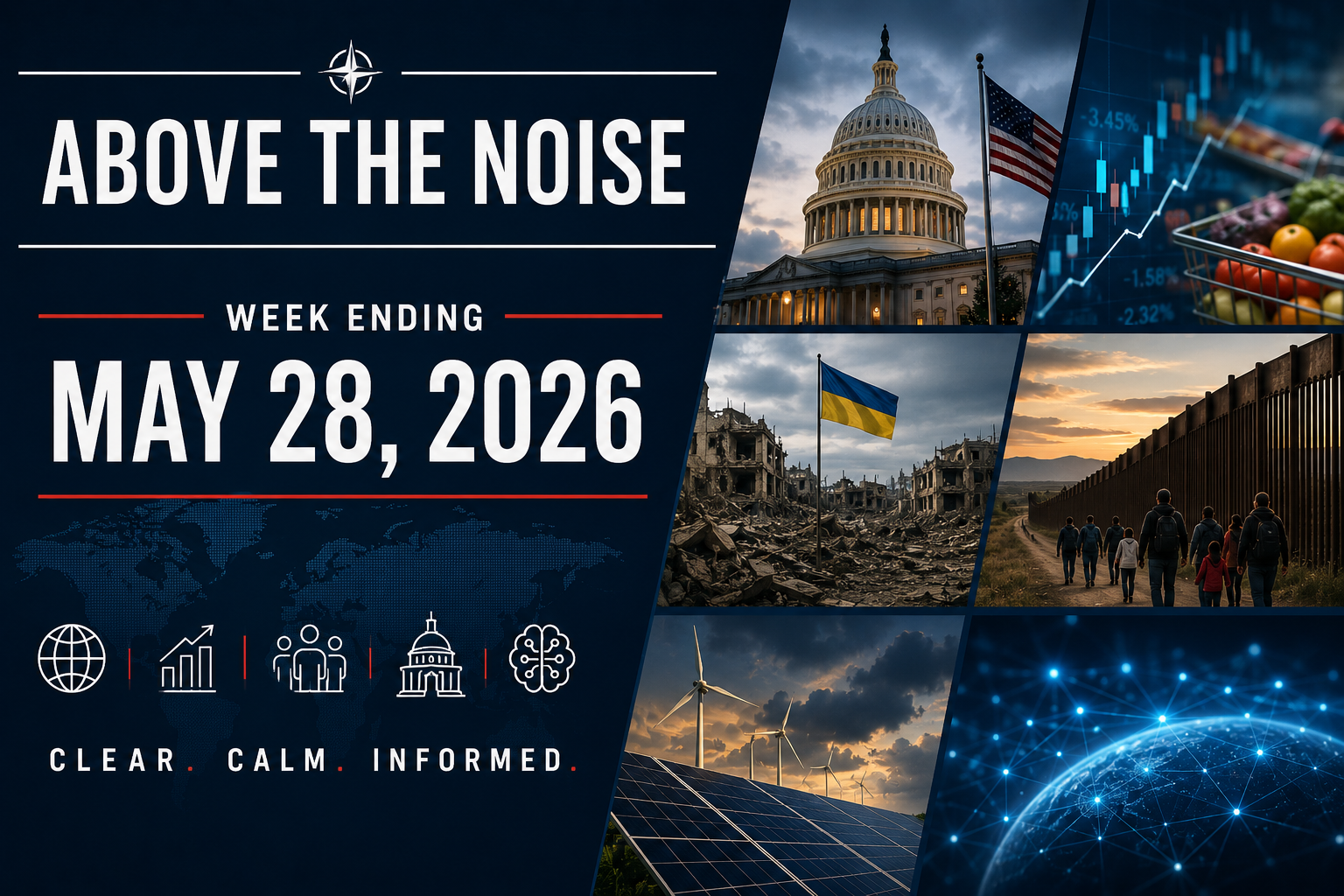
Why Current Events Matter: Living in an Uncertain World
Why Current Events Matter is a question many people ask when they see headlines about wars, inflation, immigration, artificial intelligence, and politics. While these stories may seem disconnected, they often shape the decisions families make about work, finances, education, and the future.
They’re asking a much simpler question:
“How does this affect my life?”
The biggest stories this week may seem unrelated at first glance. One involved conflict in the Middle East. Another focused on inflation. Others centered on immigration, Ukraine, artificial intelligence, and climate concerns.
But they all point to the same underlying reality: many people are trying to navigate a world that feels increasingly uncertain.
For readers looking for the headlines behind these topics, visit our More Weekly Analysis section for this week’s news roundup.
Why Current Events Matter: Rising Prices and Inflation
When economists talk about inflation, it often sounds like a technical issue involving percentages and government reports.
For most families, however, inflation feels much more personal.
It’s the grocery bill that seems higher every month. It’s insurance premiums that keep increasing. It’s wondering whether there will be enough left at the end of the month to save for retirement, a home repair, or a family vacation.
Even when inflation slows, many prices do not return to where they were before. That means families continue adjusting spending habits long after headlines move on.
The economic reports released this week were another reminder that many Americans still feel financial pressure despite signs of economic growth.
Why Current Events Matter: Global Conflicts and Everyday Costs
It is easy to view conflicts in places like Iran or Ukraine as distant events happening thousands of miles away.
In reality, global events often have local consequences.
Military conflicts can disrupt energy markets, shipping routes, and international trade. Those disruptions can eventually influence gasoline prices, food costs, manufacturing expenses, and consumer prices.
Most people will never visit the Strait of Hormuz or Eastern Europe. Yet decisions made in those regions can still affect what families pay at the pump or see on store shelves.
That is one reason global events often become kitchen-table issues.
Why Current Events Matter: Immigration Impacts More Than Politics
Immigration discussions often become highly political, but they also affect everyday life in practical ways.
Many industries rely on immigrant workers, including agriculture, healthcare, hospitality, construction, and transportation.
When immigration policies change, communities may experience shifts in workforce availability, business operations, housing demand, and local services.
Reasonable people disagree about the best policies. However, understanding how immigration affects local economies helps move the conversation beyond political slogans and toward real-world impacts.
If you’re new to policy discussions, explore our Politics 101 section where we explain many political topics in plain English.
Why Current Events Matter: AI and the Future of Work
Artificial intelligence continued making headlines this week, but many of its effects are already becoming part of daily life.
Students are using AI to learn and study. Businesses are using it to improve productivity. Employers are beginning to rethink how certain jobs are performed.
While AI offers tremendous opportunities, it also raises important questions:
- Which jobs will change?
- What skills will become more valuable?
- How should schools prepare students?
- How do we balance innovation with responsibility?
The answers to those questions may shape the next decade just as much as any election.
Why So Many People Feel Uncertain
One reason public frustration remains high is that people are dealing with multiple forms of uncertainty at the same time.
- Economic uncertainty
- Political uncertainty
- Technological uncertainty
- Global uncertainty
Each challenge alone would be manageable.
Together, they can create a feeling that the world is changing faster than people can adapt.
That does not necessarily mean things are getting worse. It does mean that many people are trying to make important decisions—about careers, education, finances, and family life—without feeling confident about what comes next.
What This Means for You
This week’s headlines may seem disconnected, but they tell a larger story.
The world is becoming more interconnected than ever. Decisions made in government offices, foreign capitals, technology companies, and global markets increasingly affect everyday life.
The goal is not to follow every headline.
The goal is to understand the trends behind them.
When you focus on those larger trends, the news becomes less overwhelming and more useful.
And that may be the most important thing to remember: staying informed is not about knowing everything. It is about understanding enough to make better decisions for yourself, your family, and your future.
No discussions yet
Be the first to join the discussion and share your thoughts with the community.